
Table of Contents
- Understanding Dog Anxiety Medication
- Signs of Stress in Dogs: When to Seek Help
- Prescription Dog Anxiety Medication: What Vets May Recommend
- Natural Calming Aids for Dogs: A Gentle Alternative
- Pros and Cons of Anxiety Medication for Dogs
- How to Choose the Right Support for Your Dog
- Frequently Asked Questions
Last Updated: September 12, 2026
Understanding Dog Anxiety Medication
Dog anxiety medication is any product, prescription or natural, used to help a dog cope with stress, fear or nervousness. It ranges from veterinary-prescribed drugs to gentler nutritional supplements, and choosing well starts with understanding what's actually causing your dog's distress.
At FortunatePaws, we talk to pet parents every week who are weighing up options for an anxious dog. Some have a puppy struggling with separation anxiety. Others have a senior dog who's become restless at night. The right answer looks different for each of them.
That's because anxiety in dogs isn't one condition. It's a cluster of responses to triggers like storms, fireworks, travel, unfamiliar people or changes in routine. A dog anxiety medication that suits a thunderstorm-phobic kelpie may be the wrong fit for a cat or a small breed with sensitive skin.
Below, we'll walk through the signs of stress worth acting on, what vets may prescribe, how natural calming aids for dogs fit into the picture, and how to choose sensibly rather than desperately.
Signs of Stress in Dogs: When to Seek Help
The signs of stress in dogs are easy to miss if you don't know what you're looking for, because dogs rarely announce their discomfort loudly. Most signal it quietly first.
Common signs include:
- Excessive panting or drooling when it isn't hot
- Pacing, restlessness or an inability to settle
- Destructive behaviour when left alone
- Hiding, trembling or tucked tail
- Loss of appetite or refusing treats
- Excessive barking, whining or howling
- Toileting indoors despite being house-trained
A single episode after a move or a loud storm isn't necessarily a problem. A pattern that repeats, escalates or affects your dog's eating and sleeping is worth a conversation with your vet.
If your dog's anxiety is mild and situational, such as during grooming or travel, a gentle nutritional approach may be a helpful addition. If it's severe, ongoing or affecting daily life, your vet is the right first call.
Prescription Dog Anxiety Medication: What Vets May Recommend
Prescription dog anxiety medication is dispensed by a veterinarian after an assessment, and typically falls into a few broad categories. Each works differently, and none is a universal fix.
Daily maintenance medications are used for ongoing anxiety. They're given regularly, and effects build over weeks rather than hours. They're often considered for dogs with generalised anxiety or noise phobias.
Situational medications are given before a known trigger, such as a storm, a flight or a vet visit. They act faster but aren't designed for daily use.
Behavioural support usually accompanies medication. A vet may recommend working with a qualified behaviourist, adjusting your dog's environment, or both (ava.com.au).
Your vet will consider your dog's age, weight, existing health conditions and other medications before prescribing. Never give your dog a medication prescribed for another animal or a human.
Prescription options can be effective, but they're not the only path, and many pet parents want to explore gentler support alongside a product rather than instead of it.
Natural Calming Aids for Dogs: A Gentle Alternative
Natural calming aids for dogs are nutritional supplements designed to support relaxation and emotional wellbeing, rather than treat a diagnosed condition. They're usually given daily or before a known stressor.
Explore the FortunatePaws Calming range today →
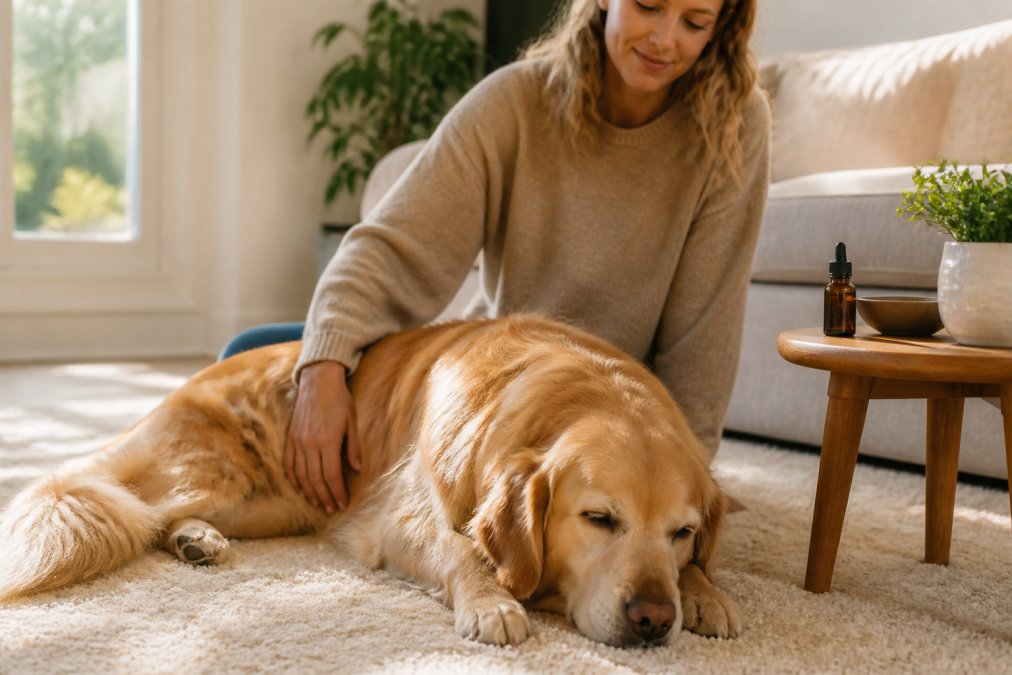
Hemp seed oil is one of the better-known options. FortunatePaws Hemp Seed Oil is 100% cold-pressed hemp seed oil, naturally rich in omega-3, omega-6 and omega-9 fatty acids. It's a nutritional supplement for dogs and cats, and may help support general wellbeing and a healthy skin and coat as part of a balanced diet.
For pets who need more targeted support around stressful moments, MellowPet Omega Drops combine hemp seed oil with a blend of calming terpenes. They're formulated to support calmness and relaxation during storms, fireworks, travel, grooming or changes in routine. They're suitable for both dogs and cats and easy to add to food.

Other natural approaches pet owners often try include:
- Calming routines and predictable daily structure
- Pheromone diffusers or collars
- Weighted or snug-fitting coats
- Increased exercise and mental enrichment
- Gradual desensitisation to the trigger
These work best as a combined approach. A supplement supports your dog's baseline; training and environment address the trigger itself.
Pros and Cons of Anxiety Medication for Dogs
Every option carries trade-offs. Here's an honest look at how prescription and natural approaches compare.
|
Approach |
Pros |
Cons |
Best For |
|---|---|---|---|
|
Prescription medication |
Vet-supervised, can be effective for severe cases |
Requires vet visits, possible side effects, ongoing cost |
Diagnosed anxiety, severe or persistent cases |
|
Natural calming supplements |
Easy to give, gentle, no prescription needed |
Results vary, not a treatment for clinical conditions |
Mild or situational stress, everyday support |
|
Behavioural training |
Addresses the root cause, long-term gains |
Takes time and consistency, may need a professional |
Most dogs, ideally alongside other support |
|
Environmental changes |
Low cost, no side effects |
Won't resolve severe anxiety alone |
All dogs, as a foundation |
Most successful plans combine two or more of these. A dog with storm phobia, for example, might benefit from a vet-reviewed plan, a calming supplement before the season, and a safe space set up at home.
How to Choose the Right Support for Your Dog
Choosing support starts with an honest assessment of severity, frequency and impact on daily life. Match the tool to the problem, not the other way around.
A simple way to think about it:
- Mild, occasional stress (a few fireworks nights a year): environmental setup plus a gentle supplement may be enough.
- Predictable stressors (grooming, travel, vet visits): a situational calming aid given beforehand often helps.
- Daily, ongoing anxiety: talk to your vet. A supplement can sit alongside their plan, not replace it.
- Severe or escalating signs: veterinary assessment first. Always.
When you're comparing natural products, look for clear ingredient lists, no unnecessary fillers, and honest labelling. FortunatePaws is a family-run Australian small business, and our products are dispatched from Western Australia. Our hemp seed oil range comes in a 30mL trial size, a 120mL everyday size, 2-pack and 3-pack bundles, and a 500mL size for larger dogs or multi-pet households.
If you're unsure where to start, the 30mL MellowPet Omega Drops is a sensible trial size, while the 120mL is a popular everyday option.

An anxious dog is exhausting for everyone, and there's no single answer that fits every pet. What matters is matching the level of support to the level of need, and being honest with yourself about when a vet needs to be involved. FortunatePaws offers Australian-made hemp seed oil and MellowPet Omega Drops to support calm behaviour and everyday wellbeing, with clean ingredients and no unnecessary fillers. Explore the FortunatePaws range of pure hemp seed oil for dogs and cats, and find the size that suits your household.
Frequently Asked Questions
What are the signs of anxiety in dogs?
Common signs of stress in dogs include pacing, trembling, excessive barking, destructive chewing, house soiling, and trying to escape. Some dogs also drool, pant heavily, or become clingy. These behaviours often appear during thunderstorms, fireworks, or when left alone. If you notice these signs regularly, it's worth talking to your vet to rule out other causes and discuss whether dog anxiety medication or natural calming aids might help.
Are there natural supplements to support a dog's relaxation?
Yes, some pet owners use natural calming aids for dogs, such as hemp seed oil or blends containing calming terpenes. For example, MellowPet Omega Drops combine hemp seed oil with terpenes to support calm behaviour during stressful situations. These are nutritional supplements, not medications, and may help support relaxation as part of a balanced routine. Always introduce new supplements gradually and check with your vet, especially if your dog is on other medication.
When should I consult a vet about my dog's behaviour?
If your dog's anxiety is severe, persistent, or affects their quality of life, consult your vet. Signs like self-harm, not eating, or extreme distress when left alone warrant a professional assessment. A vet can rule out medical issues and discuss whether prescription dog anxiety medication is appropriate. They can also advise on combining medication with behavioural training for the best outcome.