Last Updated: 30 October 2026
Quick Summary
The best low impact exercise for senior dogs includes short, regular walks on soft ground, swimming or water walking, and gentle shallow water play. Slow sniffing walks, controlled balance work and calm indoor movement also suit older dogs. Keep sessions brief and watch your dog's comfort closely.
- Two or three shorter walks often suit older dogs better than one long outing.
- Grass and softer ground give joints a gentler surface than concrete or bitumen.
- Swimming takes pressure off the joints while still working the muscles.
- Stop any balance or stretching movement that makes your dog flinch or resist.
- Raise changes like hesitating on stairs or slow rising with your vet.
Table of Contents
- Why Low Impact Exercise Matters for Senior Dogs
- Signs of Joint Pain in Senior Dogs to Watch For
- 1. Short, Regular Walks on Soft Ground
- 2. Swimming and Water Walking
- 3. Gentle Hydrotherapy-Style Play in Shallow Water
- 4. Slow Sniffing Walks and Enrichment Games
- 5. Controlled Balance and Stretching Exercises
- 6. Gentle Indoor Movement on Non-Slip Surfaces
- Frequently Asked Questions
Why Low Impact Exercise Matters for Senior Dogs
Older dogs still need to move every day, but the kind of movement changes with age. Gentle, low-impact activity can help keep muscles working and joints comfortable without the repeated jarring that can make stiffness worse. For many senior dogs, the goal is steady, comfortable movement rather than long, energetic workouts.
Low impact exercise is any activity that keeps the body moving while putting less stress on the joints. Walking on soft ground, swimming, slow sniffing walks and balance work all fall into this category. Many owners find that a routine built on these activities suits their dog's energy and mobility far better than fast running or repeated jumping. Learn how hemp seed oil may support joint health alongside gentle exercise.
Consistency matters more than intensity. Several short, calm sessions across the day often suit older dogs better than one long outing. If your dog seems more relaxed and steady after a walk, the pace is probably about right. Explore the FortunatePaws hemp seed oil range for dogs.

Signs of Joint Pain in Senior Dogs to Watch For
Joint discomfort in older dogs often shows up quietly. You may notice your dog hesitating before stairs, lying down more than usual, or taking longer to get up after a nap. Stiffness after rest, reluctance to jump into the car and a shorter walking distance are also common signs.
Watch for changes in behaviour too. A dog that stops greeting the door, avoids play it used to enjoy or seems irritable when touched around the hips or shoulders may be uncomfortable. Changes like these are worth raising with your vet, who can assess what is going on and recommend a suitable plan.
Joint discomfort in older dogs often shows up quietly. These are the common signs to keep an eye on:
| Sign | What it may look like | When to raise it |
|---|---|---|
| Hesitation on stairs | Pausing before steps or avoiding them | Raise with your vet |
| More time lying down | Resting more than usual | Note how often it happens |
| Slow to rise | Taking longer to get up after a nap | Raise with your vet |
| Stiffness after rest | Moving awkwardly once rested | Note how long it lasts |
| Reluctance to jump | Avoiding the car or furniture | Raise with your vet |
| Shorter walks | Walking less distance than before | Adjust routine and check in |
| Change in greeting | Not greeting the door as before | Note the change |
| Irritability when touched | Flinching around hips or shoulders | Raise with your vet |
1. Short, Regular Walks on Soft Ground
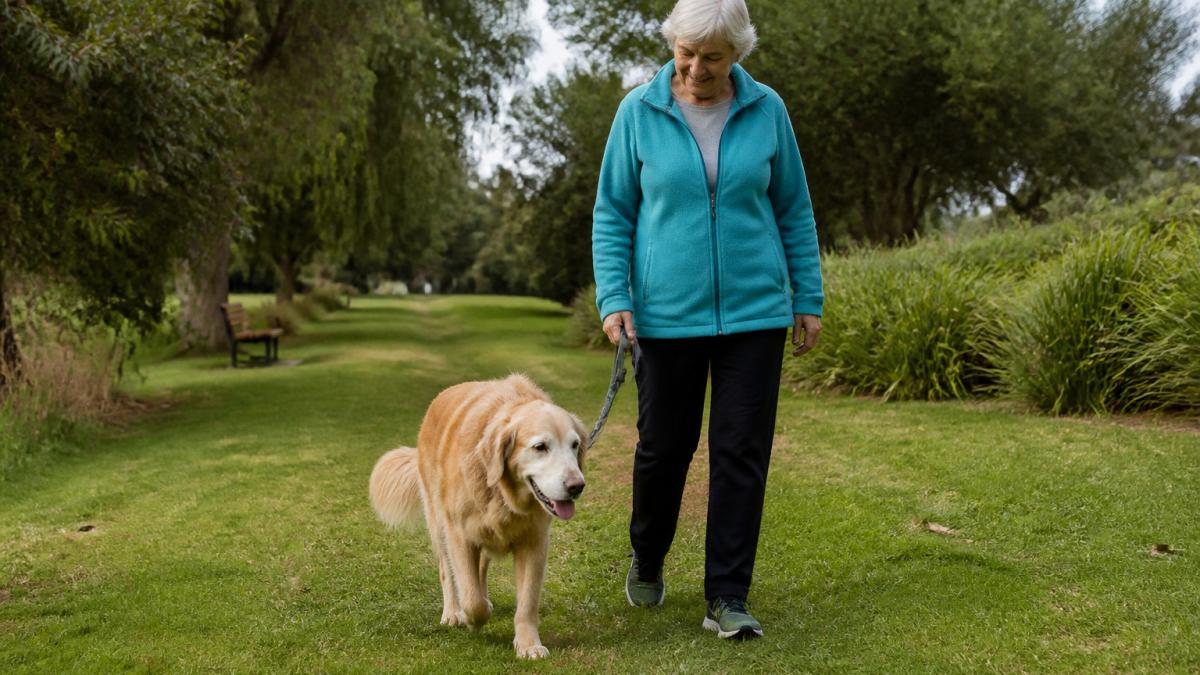
Short, regular walks are often the simplest starting point. Read practical steps for keeping an older dog mobile. Grass and softer ground can give joints a gentler surface than concrete or bitumen.
Pros:
- Easy to fit into a daily routine
- Soft surfaces reduce jarring on the legs
- Lets you pace the walk to your dog's comfort
Cons:
- Uneven ground can increase the risk of a slip or twist
- Some dogs want to keep going past what is comfortable, so you need to watch for signs of fatigue
Tip: Aim for two or three shorter walks rather than one long outing, and stop if your dog starts lagging or lifting a paw. Explore the FortunatePaws Hemp Seed Oil for Pets 120ml, a nutritional supplement that may be a helpful addition to a balanced diet.
2. Swimming and Water Walking
Water supports body weight, so swimming and water walking can be a gentle option for ageing dogs. Many dogs enjoy the sensation.
Pros:
- Takes pressure off the joints while still working the muscles
- Can be done in a pool, dam or calm, supervised water area
Cons:
- Not every dog takes to water, and some older dogs tire quickly
- Always supervise closely, as tired dogs can struggle to stay afloat
Tip: Keep sessions brief and build up slowly. Rinse your dog afterwards, especially if the water was chlorinated or salty.
3. Gentle Hydrotherapy-Style Play in Shallow Water
If swimming feels like too much, shallow water play can offer similar benefits. Letting your dog wade, step over gentle obstacles or walk slowly through a shallow stream gives the legs a controlled workout.
Pros:
- Lower risk than deep water for nervous or unsteady dogs
- Encourages balanced movement and weight shifting
Cons:
Rose-Hip Vital | Canine 150g or 500g →
- Slippery surfaces can cause falls, so choose a non-slip entry point
- Water temperature matters, so avoid very cold water for older dogs
Tip: Keep the water shallow enough that your dog can stand comfortably, and reward calm, steady steps.
4. Slow Sniffing Walks and Enrichment Games
Mental activity counts as exercise too. Slow sniffing walks let your dog explore at its own pace, which many dogs find satisfying. Simple enrichment games, such as hiding treats in a snuffle mat, keep the mind busy without demanding much physical effort.
Pros:
- Low physical demand, suitable for many dogs with limited mobility
- Keeps the mind engaged
Cons:
- Does not build much muscle on its own, so pair it with gentle walking
- Some dogs may get overexcited by new smells, so keep games calm
Tip: Let your dog choose the direction on a sniffing walk. Many owners find this is the part their dog enjoys most.
5. Controlled Balance and Stretching Exercises
Balance and stretching exercises can be a simple way to encourage movement and coordination. Simple movements such as slow sit-to-stand repetitions, weight shifts or gentle leg stretches can be done at home with a few minutes' effort.
Pros:
- Can be done indoors in a small space
- Helps maintain flexibility and posture
Cons:
- Must be done slowly and carefully to avoid strain
- Not suitable for dogs in pain during movement, so check with your vet first
Tip: Stop any movement that causes your dog to flinch or resist. Short sessions of one to two minutes are usually enough.
6. Gentle Indoor Movement on Non-Slip Surfaces
Indoor movement is useful on days when outdoor walks are difficult. Find more tips for supporting senior dog mobility at home. Short walks around the house, gentle stair practice with supervision and slow turning on rugs all keep the body moving.
Pros:
- Convenient in bad weather or when your dog is tired
- Lets you control the environment closely
Cons:
- Slippery floors such as tiles or polished timber increase the risk of falls
- Stairs can be hard on joints if used too often
Tip: Add non-slip rugs or runners along regular routes, and consider a ramp for steps where practical.
Frequently Asked Questions
How much exercise does a senior dog need each day?
Most senior dogs do well with several short, gentle outings each day rather than one long session. Many owners find that two or three walks of 10 to 20 minutes, adjusted to the dog's size, breed and comfort, keep muscles working without overtiring the joints. Watch how your dog behaves the following morning. Stiffness that eases after a few minutes of moving is usually a good sign, while a dog that is reluctant to rise or limps after activity may need a shorter routine. If you are unsure how much is right for your dog, your vet can help you set a sensible starting point.
What are signs that my dog is struggling with exercise?
Common signs include slower getting up, hesitation on stairs, reluctance to jump into the car, lagging behind on walks, a shorter stride, or lingering limps after activity. Changes in mood, such as less interest in play or a dog that seems withdrawn, can also point to discomfort. Because these signs can overlap with other conditions, it is worth booking a check-up with your vet if you notice them persisting. Keeping a simple note of how your dog moves from day to day can make that conversation easier.
Is walking still good for senior dogs with stiff joints?
Yes, for many senior dogs, regular gentle walking remains one of the most useful forms of exercise. The key is to keep the pace relaxed, choose softer ground where possible, and avoid steep hills or sudden bursts of running. Many owners find that shorter, more frequent walks suit stiff joints better than a single long outing. Start slowly and build up gradually, and stop if your dog seems uncomfortable. Warm up with a slow first few minutes of walking before picking up the pace.
How can I help my senior dog stay active without causing pain?
Focus on movement that is gentle, predictable and enjoyable. Slow walks, sniffing games, swimming in a safe pool or calm water, and short bouts of indoor play on non-slip surfaces all keep senior dogs engaged. Warm, dry bedding, a supportive bed and a consistent routine also help. Pay attention to how your dog recovers after each activity and adjust the length or intensity to suit. Pair movement with a conversation with your vet, who can advise on pain management and whether any supplements may be a helpful addition to your dog's diet.
Finding the right balance of movement for an older dog takes patience, but a steady routine built on low-impact activity can make everyday life more comfortable. Explore the FortunatePaws range of pure hemp seed oil for dogs and cats if you would like a nutritional addition to your dog's daily routine, and always check with your vet about your dog's individual needs.