
Table of Contents
- Understanding Signs of Joint Pain in Dogs
- How to Help Senior Dog Mobility at Home
- Home Modifications for Senior Dogs
- Senior Dog Exercise Tips
- Natural Joint Support for Senior Dogs
- When to Consult Your Veterinarian
- Conclusion
- Frequently Asked Questions
Last Updated: September 4, 2026
Watching your once-energetic companion slow down is one of the harder parts of pet ownership. A dog who used to bound up the porch steps may now pause and look up at you, waiting for a lift. Supporting senior dog mobility is about making daily life easier, safer, and more comfortable for your ageing friend. This practical guide from FortunatePaws walks you through the signs to watch for and the simple changes that can help your dog stay active and content well into their golden years.
The key is to focus on what you can do at home, day by day, rather than feeling overwhelmed by the bigger picture. Small adjustments to your routine, your home, and your dog's nutrition can genuinely improve their quality of life. We will cover how to spot discomfort early, practical home modifications, gentle exercise tips, and natural ways to support your dog's joints. You will finish this guide with a clear action plan you can start today.
Understanding Signs of Joint Pain in Dogs
Recognising the early signs of joint pain in dogs is the first step toward helping them. Dogs are famously stoic, so they often hide discomfort until it becomes significant. Changes are usually gradual, which makes them easy to miss if you are not looking closely.
Common indicators include stiffness after rest, especially first thing in the morning, or lagging behind on walks they used to enjoy. You might notice your dog hesitating before jumping into the car, struggling on stairs, or showing reluctance to be touched in certain areas. Behavioural shifts, such as increased irritability or sleeping more than usual, can also point to underlying discomfort.
A common mistake is dismissing these signs as "just old age." While ageing is a factor, discomfort is not something your dog should simply have to live with. Noticing these changes early gives you more options for support. If you see several of these signs, it is worth discussing them with your veterinarian to rule out more serious conditions.
How to Help Senior Dog Mobility at Home
Once you have noticed your dog slowing down, you can take practical steps at home to help senior dog mobility. Start by keeping your dog at a healthy weight, as excess weight places additional strain on already tired joints. A leaner body makes a significant difference to everyday comfort.
Routine matters more than intensity for older dogs. Shorter, more frequent walks are often better than one long walk that leaves your dog sore for days (aaha.org). Let your dog set the pace and be prepared to turn back earlier on tougher days. Mental stimulation, such as puzzle toys or gentle nose-work games, provides enrichment without putting stress on their body.
Warmth can also ease stiff joints. A warm, draught-free sleeping spot and perhaps a dog coat on cooler mornings can help your dog move more freely. Gently massaging your dog's legs and back after exercise may improve circulation and comfort. These small, consistent efforts are the foundation of supporting your dog's mobility at home.
Home Modifications for Senior Dogs
Your home can be adapted to remove barriers for a dog with reduced mobility. The goal is to minimise the need for difficult movements like climbing and jumping while keeping your dog's independence intact.
Flooring and Grip
Slippery floors are a major hazard for older dogs. Hardwood, laminate, and tiles offer little traction, causing dogs to splay their legs or lose confidence. A dog that fears slipping will often refuse to move at all.
The simplest fix is adding non-slip runners or rugs to the main pathways your dog uses, especially in hallways and near their food bowls. You can also use paw wax or dog booties to improve grip on smooth surfaces. Keeping your dog's nails trimmed helps their paws grip the floor properly, so do not overlook this simple piece of maintenance.
Ramps and Steps
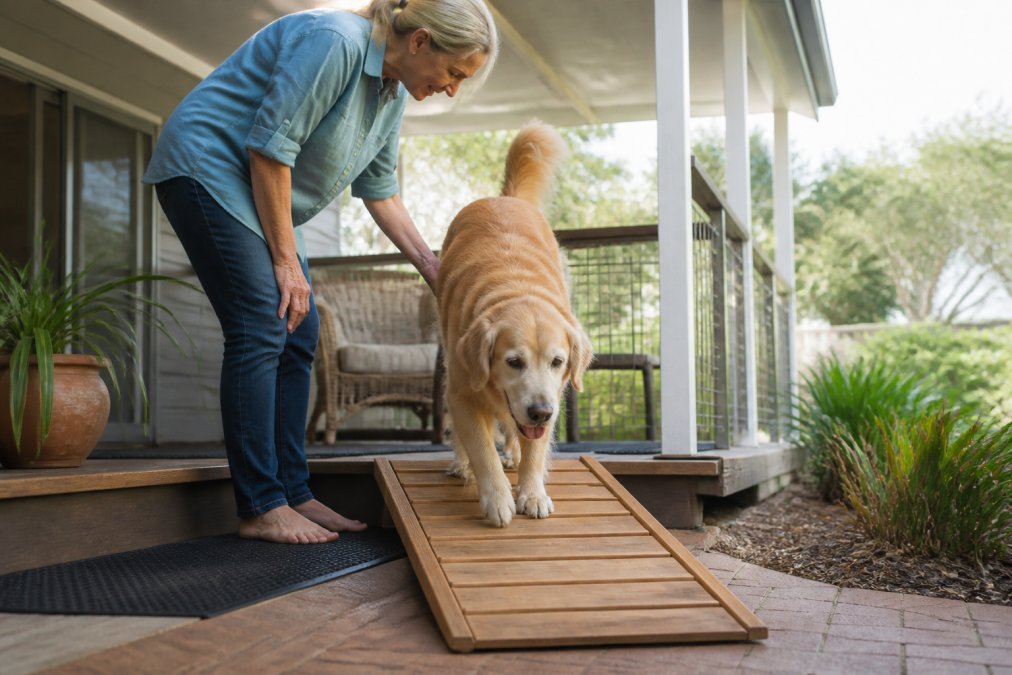
If your dog struggles with stairs or needs to get into the car, a ramp can be a worthwhile investment. Ramps are gentler on joints than lifting, which can be tricky for both of you and risks injury.
Choose a ramp with a non-slip surface and a gentle incline. Introduce it slowly with plenty of treats so your dog associates it with something positive. For furniture they love, such as the sofa, consider pet steps or a ramp instead of letting them jump down, which jars their joints.
Bedding and Rest Areas
Orthopaedic beds are not just a luxury for senior dogs. They provide supportive cushioning that relieves pressure on hips and elbows. Look for beds with egg-crate or memory foam that mould to your dog's body.
Place several comfortable beds around the house so your dog does not have to travel far to rest. Raised beds can also help older dogs get up more easily by providing extra height. Ensuring your dog has a warm, supportive place to sleep is one of the most effective ways to support senior dog mobility.
Senior Dog Exercise Tips
Exercise is still essential for senior dogs, but the type and amount need to adapt. The aim is to maintain muscle mass, which supports the joints, without causing pain or exhaustion. Swimming is often an excellent option, as the water supports your dog's weight while allowing them to move freely (avma.org).
Explore the FortunatePaws Mobility range today →
Consistency is more valuable than intensity. A gentle 15-minute walk twice a day often serves a senior dog better than a single hour-long outing. Watch your dog's body language closely and end the session before they become tired or sore. A dog that is limping the day after exercise has done too much (aaha.org).
Incorporate gentle strength and balance exercises, such as asking your dog to sit and stand a few times or walking slowly over uneven terrain. These activities help maintain coordination and muscle tone. Always warm your dog up with a slow walk before any more active play.
Natural Joint Support for Senior Dogs
Alongside lifestyle changes, natural joint support for senior dogs can be a helpful addition to their daily care. Many owners find that nutritional supplements may help maintain joint health and everyday mobility.
At FortunatePaws, a few options may be helpful for older dogs. We offer Rose-Hip Vital Canine powder, which is a natural, plant-based powder scientifically and clinically proven to support joint health and wellbeing. For a different approach, our Mussel Flakes meal topper provides natural joint-supporting nutrition that you can sprinkle over dinner. We also offer Hemp Seed Oil for pets, which supports healthy joints and everyday wellness, and various other options including Shark Cartilage Treats, a tasty chew rich in naturally occurring glucosamine and chondroitin.

Always check the product page for suitability and feeding guidelines. Supplements may be a helpful addition to a balanced diet, but they should never replace a product or prescribed medication.
When to Consult Your Veterinarian
Home care has its limits, and knowing when to seek professional advice is crucial. If your dog suddenly becomes unable to walk, shows severe pain, or collapses, seek veterinary attention immediately. These are emergencies.
Make an appointment if you notice a persistent limp, significant stiffness that does not improve with rest, or a noticeable change in behaviour. Your vet can diagnose the underlying cause of your dog's mobility issues and recommend appropriate treatment, which may include prescription anti-inflammatories or pain relief.
It is also wise to have your senior dog checked regularly, perhaps every six months, even if they seem fine. Your vet can spot early signs of joint issues and help you manage them proactively. Natural supplements like those we offer at FortunatePaws may support your dog's wellbeing, but they are not a substitute for professional veterinary diagnosis and treatment.
Conclusion
Supporting your senior dog's mobility is a daily commitment of small, thoughtful actions. By learning to spot the signs of joint pain in dogs, making a few home modifications, adjusting exercise, and considering natural joint support, you can make a real difference to your dog's comfort and happiness.
The journey involves patience and close observation. You know your dog better than anyone, so trust your instincts when something feels off. Combining sensible home care with regular veterinary check-ups gives your dog the best chance at a comfortable, active old age.
Explore the FortunatePaws range of natural joint and mobility supplements to find gentle, Australian-made support for your beloved companion. Helping your dog move more easily is one of the kindest gifts you can give them in their senior years.
Frequently Asked Questions
What are the signs of mobility decline in senior dogs?
Common signs include stiffness when getting up, reluctance to climb stairs, limping, difficulty jumping onto furniture, and slower movement after rest. You might notice your dog taking shorter walks or stopping more frequently. Some older dogs also show reluctance to play or exercise they once enjoyed. These changes often develop gradually, so watching for patterns over weeks rather than days helps you spot real mobility issues.
How can natural joint support help my senior dog's mobility?
Natural supplements like rose-hip powder, mussel flakes and hemp seed oil contain compounds that may help support joint health and everyday mobility. Rose-Hip Vital Canine is scientifically and clinically proven to support joint health and wellbeing. Mussel flakes provide natural glucosamine and chondroitin, whilst hemp seed oil supports general wellbeing. These work best as part of a complete approach alongside exercise, home modifications and a product.
How long does it take to see improvements in my senior dog's mobility?
Changes typically develop gradually over 4 to 8 weeks, depending on your dog's age and the severity of mobility issues. Consistency matters more than speed—daily supplements, regular gentle exercise and home modifications work together. Some owners may notice their dog moving more freely within a few weeks, whilst others see gradual improvement over months. Your vet can help you track progress and adjust your approach if needed.
Are there simple exercises to help an older dog stay mobile?
Gentle, regular movement is ideal for senior dogs. Short walks at a comfortable pace, swimming or wading in shallow water, and slow play sessions help maintain muscle and flexibility. Avoid high-impact activities like jumping or running on hard surfaces. Even 10 to 15 minutes of gentle activity twice daily can make a real difference. Always watch your dog for signs of discomfort and stop if they seem tired or sore.