Last Updated: October 27, 2026
Quick Summary
Use small treats to reward calm behaviour indoors by rewarding your dog the moment it settles, keeping each treat tiny so you don't hype it up again. Run short five-minute sessions when your dog is already tired, and reward one treat per calm moment before fading to every second or third.
- Set up a calm zone and run short sessions when your dog is already tired, after a walk or a meal.
- Five minutes is plenty for a session, so end before your dog gets bored.
- Start with one treat per calm moment, then reward every second, then every third.
- Keep rewards unpredictable once the habit sticks so your dog stays interested.
- Kangaroo Bites are bite-sized and made with Australian kangaroo and hemp seed oil.
Table of Contents
- Why Small Treats Work for Calm Behaviour Indoors
- How to Teach a Dog to Settle Indoors
- Choosing Small Training Treats for Dogs
- How Often to Reward a Dog During Training
- Keeping Calm Rewards Consistent When Your Dog Gets Excited
- Picking Up a Bag of Calm-Moment Treats
- Frequently Asked Questions
Why Small Treats Work for Calm Behaviour Indoors
Small treats work for calm behaviour because they let you reward a dog the moment it settles, without hyping it up again.
The trick is size and timing.
RSPCA Australia advice on reward-based training supports positive reinforcement. Small treats are one possible delivery method for that approach.
How to Teach a Dog to Settle Indoors
Teaching a dog to settle indoors starts before the dog is excited. Set the scene while everything is quiet, then reward the calm that follows. Learning how to teach a dog to settle indoors is mostly about preparation, not persuasion.
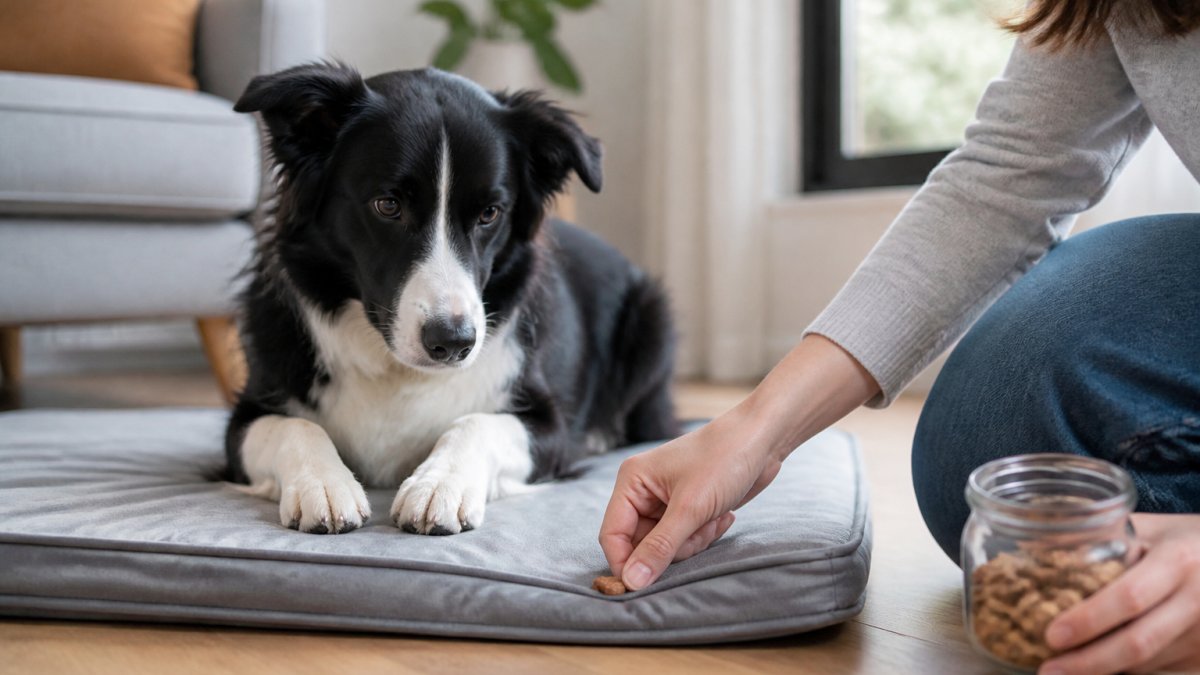
Owner placing a small treat by a relaxed dog resting on a mat in a sunny living room
Set Up a Calm Zone Before You Start
Then run a short session when your dog is already tired, after a walk or a meal. Five minutes is plenty. End before your dog gets bored.
Capture Calm Instead of Commanding It
Over a week or two, most dogs start offering the behaviour more often. That's the goal.
Choosing Small Training Treats for Dogs
Our Kangaroo Bites training treats are bite-sized and made with Australian kangaroo and hemp seed oil, which suits short, calm reward sessions. Sardine Pellets are a small, grain-free option.


A quick comparison to help you choose:
|
Treat type |
Best for |
Watch out for |
|---|---|---|
|
Soft bite-sized pieces |
Calm sessions, fast rewards |
Can crumble in a pocket |
|
Air-dried jerky, torn small |
High-value moments |
Be aware of quantity given |
|
Freeze-dried single protein |
Sensitive stomachs |
Often pricey per gram |
How Often to Reward a Dog During Training
Start with one treat per calm moment. Then reward every second calm moment. Then every third. This is how often to reward a dog during training in practice: frequent at the start, sparse once the habit sticks.
Kangaroo Bites Training Treats | 100G →
Building a Reward Schedule That Fades
Keep rewards unpredictable after that. A dog that never knows when the next treat comes stays interested. A dog that gets one every time starts expecting it.
Keeping Calm Rewards Consistent When Your Dog Gets Excited
why some pets struggle to settle at night and what gentle support may help. managing dog separation anxiety covers practical steps.
MellowPet Omega Drops combine hemp seed oil with calming terpenes to support relaxation during storms, travel or routine changes.
Picking Up a Bag of Calm-Moment Treats
FortunatePaws is a family-run Australian small business. Our range includes natural treats.
Kangaroo Bites and Sardine Pellets are both bite-sized and easy to break down further.
Calm behaviour takes patience, and the right reward makes it easier. Explore the FortunatePaws range of natural training treats, made with simple ingredients and dispatched from Western Australia. Our bite-sized Kangaroo Bites and grain-free Sardine Pellets are designed for exactly this kind of quiet, consistent reward work. Get started with FortunatePaws and turn everyday calm moments into lasting habits.
Frequently Asked Questions
How small should training treats be?
Aim for pieces about the size of a pea or a small fingernail, roughly 5 to 10 millimetres across. Small treats let you reward often without overfeeding, which matters when you are marking calm behaviour many times in a session. Bite-sized options such as Kangaroo Bites or Sardine Pellets are already portioned for this, so you can hand one over without breaking it up. If you are using larger jerky, tear it into smaller pieces before you start so the reward stays quick and low value in calories.
How often should you reward calm behaviour?
Start by rewarding every calm moment you notice, especially in the first week. That could mean a treat every 30 to 60 seconds while your dog rests quietly beside you. As the behaviour becomes more reliable, stretch the gaps to a few minutes and then reward randomly. The aim is for your dog to learn that settling indoors is worth doing, not to keep them waiting for a treat. Keep sessions short, around five to ten minutes, and always finish while your dog is still relaxed.
What should I do if my dog gets excited when I offer a treat?
Deliver the treat calmly and low, near the floor rather than above your dog's head. Avoid exciting talk or quick movements, and wait for a pause in the excitement before rewarding. If your dog jumps up, withhold the treat and wait for all four paws to settle again. Practice with small training treats for dogs that are easy to eat quickly, so the reward does not create a long, exciting chewing session. Over a few sessions, most dogs learn that calm gets the treat faster than bouncing does.
Can praise be used alongside treats to reward calm behaviour?
Yes, and it helps. Pair a quiet, low-key verbal marker such as 'good settle' with the treat so the words start to carry the same meaning. Keep your voice calm rather than high-pitched, because excited praise can rev your dog up again. Over time you can lean more on praise and use small treats less often, which makes the habit easier to maintain in everyday life. The combination of calm praise and a small food reward is usually more effective than either one alone.