Table of Contents
- Understanding Separation Anxiety in Dogs
- Recognising the Signs of Separation Anxiety in Dogs
- How to Train a Dog to Be Left Alone
- Developing a Dog Separation Anxiety Training Plan
- How Long Does Dog Separation Anxiety Training Take
- Natural Support for Managing Separation Anxiety
- When to Seek Professional Help and Manage Dog Separation Anxiety
- Frequently Asked Questions
Last Updated: 17 October 2026
Understanding Separation Anxiety in Dogs
Separation anxiety is a condition where dogs become distressed when left alone or separated from their owners. It's different from simple boredom or mild fussiness, it's genuine fear that triggers a stress response in your dog's body. Dogs with separation anxiety may panic when they realise you're leaving, even if you've only stepped out for a few minutes (The American Veterinary Society of Animal Behaviour).
This happens because some dogs form such strong bonds with their owners that being apart feels genuinely frightening. Their brain doesn't understand that you'll come back.
The good news is that you can manage dog separation anxiety with patience and the right approach. Understanding what's driving your dog's behaviour is the first step toward helping them feel safer and more confident when alone.
Recognising the Signs of Separation Anxiety in Dogs
Your dog shows signs of separation anxiety through both behaviour and physical responses. The most obvious signs happen when you're about to leave or shortly after you go.
Common behavioural signs include:
- Destructive behaviour (chewing furniture, doors, or window frames)
- Excessive barking or howling when you leave
- Pacing or restlessness before you depart
- Following you constantly from room to room
- Panic when you pick up your keys or put on shoes
- Attempting to escape from rooms or crates
- Toileting indoors (even if house-trained)
Physical signs of stress include:
- Excessive drooling or panting
- Dilated pupils
- Trembling or shaking
- Loss of appetite
- Vomiting or diarrhoea
The severity varies widely. Some dogs show mild anxiety, whining or mild destructiveness (The American Veterinary Society of Animal Behaviour). Others experience severe panic that leads to injury, property damage, or dangerous escape attempts. If your dog's anxiety is severe, professional help becomes important sooner rather than later.
How to Train a Dog to Be Left Alone
Training your dog to feel comfortable alone is a gradual process. You're essentially teaching them that being apart from you is safe and normal, not something to fear.
Start with short absences
Begin with absences so brief your dog barely notices. This might mean stepping out of the room for 10 seconds, then returning before any anxiety appears. The goal is to build a pattern where you leave and come back, and nothing bad happens.
Gradually extend these absences:
- Week 1: Leave for 10-30 seconds
- Week 2: Leave for 1-2 minutes
- Week 3: Leave for 5-10 minutes
- Week 4: Leave for 15-20 minutes
This might feel slow, but it's the foundation. Rushing this stage often backfires because your dog learns that anxiety gets rewarded with your return.
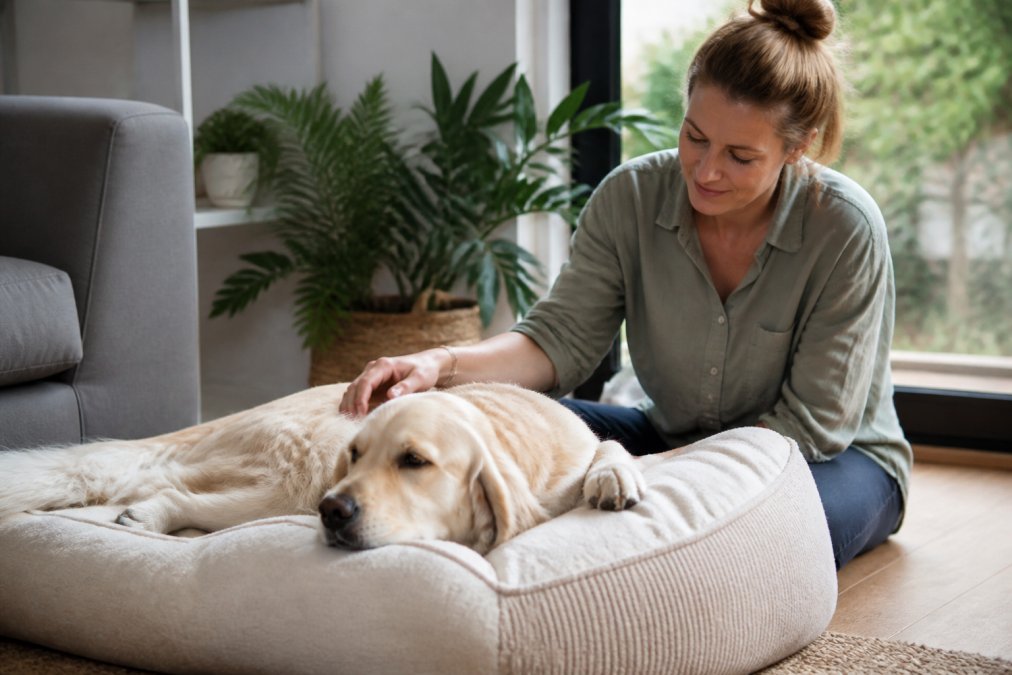
A calm dog relaxing peacefully on a comfortable bed
Create a safe space
Your dog needs a designated area where they feel secure when alone. This could be a crate, a specific room, or a playpen. The space should feel like a den, enclosed, comfortable, and associated with positive things.
Make this space appealing:
- Add soft bedding or blankets
- Leave a long-lasting chew or puzzle toy
- Keep it quiet and dimly lit
- Never force your dog into the space as punishment
- Spend time in the space together before leaving
Your dog learns to relax in this space through repetition. Over time, being in it becomes calming rather than stressful.
Build positive associations
Your dog's brain needs to learn that your departure signals good things, not abandonment. Change the meaning of the cues that trigger anxiety.
Try these strategies:
- Put on your shoes without leaving (do this randomly throughout the day)
- Pick up your keys and sit down instead of heading out
- Leave the house for 30 seconds, then return calmly (no big greeting)
- Give a special treat or toy only when you're about to leave
- Practice leaving and returning at random times so patterns don't trigger anxiety
The key is unpredictability. If your dog knows you always leave at 9 a.m., anxiety builds as that time approaches. Random departures keep their nervous system from anticipating the separation.
Developing a Dog Separation Anxiety Training Plan
A structured plan helps you track progress and stay consistent. Consistency matters more than intensity, small, regular practice beats occasional long sessions.
Week-by-week progression
Weeks 1-2: Foundation
- Practice leaving for 10-30 seconds, 3-5 times daily
- Establish the safe space and make it rewarding
- Start unpredictable departure cues (shoes, keys, jacket)
- Keep departures and returns completely calm and low-key
Weeks 3-4: Building tolerance
- Extend absences to 2-5 minutes
- Introduce a long-lasting chew or puzzle toy as a departure signal
- Leave the room with the door closed for short periods
- Practice while your dog is in the safe space
Weeks 5-8: Extending duration
MellowPet Omega Drops 30ml | Stress Relief for Dogs & Cats →
- Gradually increase absences to 15-30 minutes
- Start leaving the house (not just another room)
- Vary the time of day you practise
- Watch for setbacks and slow down if needed
Weeks 9-12: Real-world application
- Work toward absences matching your actual work or routine schedule
- Practise leaving during different times of day
- Test your dog's confidence with slightly longer absences
- Continue reinforcing calm behaviour
Tracking your dog's progress
Keep a simple log of your training sessions. Note the length of absence, any signs of anxiety, and your dog's behaviour when you return. This helps you spot patterns and know when you're ready to progress.
Record:
- Date and time of absence
- Duration you left your dog alone
- Anxiety signs observed (if any)
- Your dog's behaviour on your return
- Any improvements or setbacks
Progress isn't always linear. Your dog might handle 10 minutes beautifully for a week, then regress to anxiety at 8 minutes. This is normal. Consistency and patience matter far more than speed.
How Long Does Dog Separation Anxiety Training Take
There's no fixed timeline because every dog is different. Some dogs show improvement within 2-3 weeks. Others need 2-3 months of consistent work. A few dogs require ongoing support beyond that.
Factors that influence progress include:
- The severity of your dog's anxiety
- How consistently you practise
- Your dog's age and temperament
- Whether you've identified the root cause (rescue dog, past trauma, breed tendency)
- Whether you're using additional support tools
The most important thing is not to rush. A dog that takes three months to feel comfortable alone is still making genuine progress. Pushing too fast often creates setbacks that take longer to recover from than the original slow approach would have.
Natural Support for Managing Separation Anxiety
Alongside training, natural support can help your dog feel calmer during the process. This might include supplements, environmental changes, and calming strategies.
Some pet parents find that products designed to support relaxation make training easier. MellowPet Omega Drops, for example, combine hemp seed oil with a blend of calming terpenes to support calmness and relaxation during stressful situations like separation. These can be given daily as part of your dog's routine, or can be given before stressful situations.

Other helpful approaches include:
- Playing calming background music or white noise
- Using pheromone diffusers
- Keeping departure routines calm and matter-of-fact
- Ensuring your dog gets adequate exercise before you leave
- Maintaining a consistent daily schedule
Natural support works best alongside training, not as a replacement for it. You're still teaching your dog that being alone is safe, the supplements simply help their nervous system stay calmer while you do.
When to Seek Professional Help and Manage Dog Separation Anxiety
If your dog's anxiety is severe, or if you're not seeing progress after 4-6 weeks of consistent training, professional support is worth considering. A qualified behaviourist or trainer experienced with anxiety can assess your dog's specific situation and adjust your approach.
Signs you should seek professional help include:
- Your dog injures themselves trying to escape
- Destructive behaviour is dangerous or escalating
- Your dog shows no improvement after consistent training
- The anxiety is affecting your ability to leave home
- Your dog's distress seems extreme or unmanageable
A professional can rule out underlying medical issues, identify specific triggers you might have missed, and provide tailored strategies. They might also recommend working with your vet to explore whether additional support is appropriate for your dog's situation.
Managing dog separation anxiety takes patience, consistency, and genuine commitment to your dog's emotional wellbeing. The process works because you're addressing the root cause, your dog's fear of being alone, rather than just managing the symptoms.
Start small, stay consistent, and celebrate progress at every stage. Your dog's confidence will build gradually, and the effort you invest now pays dividends in a calmer, more confident companion. Explore the FortunatePaws range of natural wellness products designed to support your dog's emotional wellbeing during training and beyond.
Frequently Asked Questions
What are the main signs of separation anxiety in dogs?
Common signs include destructive behaviour when you leave, excessive barking or howling, house soiling despite being house-trained, pacing, drooling, or attempting to escape. Some dogs show panic or distress as soon as you prepare to leave. If your dog displays these behaviours only when alone, separation anxiety is likely the cause. It's worth noting that mild anxiety differs from severe cases—severity affects how quickly training progresses and whether additional support may help.
How long does it take to help a dog with separation anxiety?
Most dogs show improvement within 4–8 weeks of consistent training, though timelines vary. Mild cases may improve faster, whilst severe anxiety can take 3–6 months or longer. Progress depends on your dog's temperament, how frequently you practise, and whether you're consistent with the training plan. Some owners see small changes within days, but lasting confidence typically develops gradually. Patience and consistency matter more than speed.
Can I use natural support alongside separation anxiety training?
Yes. Many pet parents combine training with natural calming support. MellowPet Omega Drops, which contain hemp seed oil and calming terpenes, may help support relaxation during the training process. They're designed to support calmness during stressful situations and can be given daily or before stressful situations. Always introduce any supplement gradually and monitor your dog's response. Natural support works best as part of a complete training plan, not as a replacement for it.
Should I leave my dog alone if they have separation anxiety?
Yes, but gradually and carefully. Leaving your dog alone is essential for building confidence, but rushing the process can worsen anxiety. Start with very short absences—even 30 seconds—and build up slowly. The goal is to teach your dog that you always return and that being alone is safe. Avoiding leaving your dog alone entirely can actually reinforce anxiety. A structured training plan helps you progress at a pace your dog can manage.