Last Updated: November 16, 2026
Quick Summary
Hemp oil for pets is a nutritional supplement pressed from hemp seeds, rich in omega-3 and omega-6 fatty acids rather than a medication. It supports healthy skin and coat, joint health and everyday mobility, and general wellbeing as part of a balanced diet. Start with a small amount and introduce it gradually.
- Pure hemp seed oil should list one ingredient on the label: hemp seed oil.
- Look for cold-pressed or expeller-pressed oil, and ask if the method is not stated.
- For cats, start with a few drops hidden in their meal.
- Introduce the oil at a quarter of the intended amount for the first week.
- Ask your vet first if your pet is on medication, pregnant, nursing or booked for surgery.
Table of Contents
- What Hemp Oil for Pets Actually Is
- Hemp Seed Oil for Dogs: What It Supports
- Hemp Oil for Cats: A Gentler Approach
- Hemp Seed Oil for Dogs with Dry Skin
- How to Give Hemp Seed Oil to Pets
- Choosing a Bottle: Sizes, Quality and Label Checks
- When to Ask Your Vet First
- Frequently Asked Questions
What Hemp Oil for Pets Actually Is
Hemp oil for pets is a nutritional supplement pressed from hemp seeds. It is a food oil, rich in essential fatty acids, not a medication. That distinction matters more than any other fact in this guide, because it shapes what you should expect from the bottle and how you should read the label.
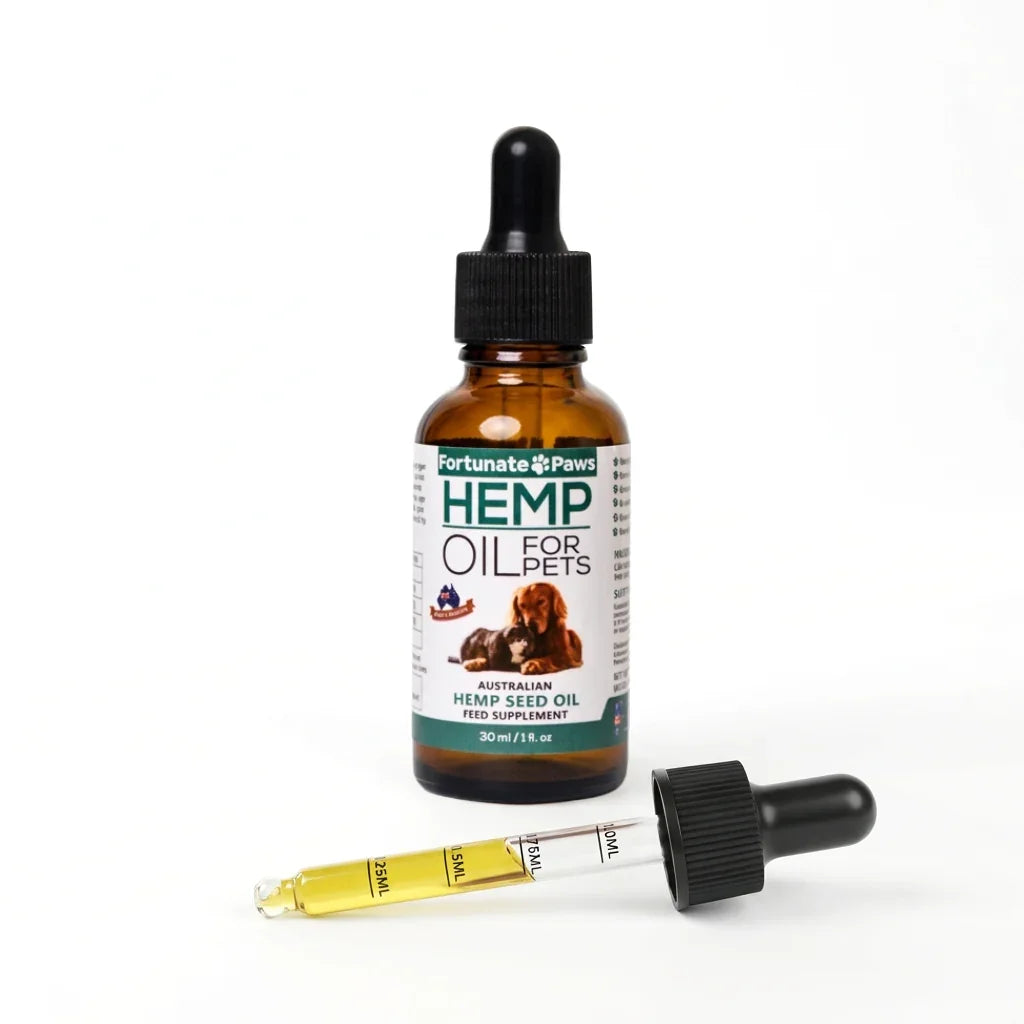
At FortunatePaws, our hemp seed oil is 100% pure and cold-pressed, and it is naturally rich in omega-3 and omega-6 fatty acids.
Here is the part most guides get wrong: hemp seed oil and cannabis oil are not the same product. One is a food. The other is a regulated substance. They come from different parts of the plant, they contain different things, and they are sold under different rules.
Why Cold-Pressed Hemp Seed Oil Is Different from Cannabis Oil
Cannabis oil is extracted from the flowers and leaves of the plant and is regulated as a therapeutic good. Hemp seed oil is pressed from the seeds, which contain no meaningful amount of those compounds. Different plant part, different product, different rules.
A simple way to think about it: the seed is the grain, the flower is the part with the active compounds. Pressing grain gives you a cooking oil. That is the category hemp seed oil belongs to, and it is why it sits on the shelf as a food rather than behind a pharmacy counter.
Australian readers can check the Therapeutic Goods Administration guidance on hemp products if they want the regulatory detail. For everyday purposes, the label tells you: seed oil lists hemp seed oil and nothing else.
Reading a Label Without Getting Lost
Labels on hemp products vary widely, and a few checks will tell you most of what you need to know.
- Ingredient list. A pure hemp seed oil should list one ingredient: hemp seed oil. Anything else is a blend, which is fine if it is disclosed, but you should know what you are buying.
- Extraction method. Look for cold-pressed or expeller-pressed. If the method is not stated, ask.
- Country of origin. Australian-grown and Australian-pressed is a reasonable starting point if you want a shorter supply chain.
- Batch and best-before information. Oils oxidise, and a clear date helps you judge freshness.
- Storage instructions. A good oil will tell you to keep it cool and dark once opened.
Watch out: a label that leans on vague phrases like "full spectrum" or "pure extract" without naming the plant part is not giving you enough to make a decision. Ask the seller what is actually in the bottle.
What Hemp Seed Oil Is Not
It is worth being plain about this, because the terms get muddled online. Hemp seed oil is not a medicine, it is not a sedative, and it is not a replacement for veterinary care. It is a source of healthy fats that many pets do not get enough of from processed food.
That is the whole promise. It supports healthy skin and coat, supports joint health and everyday mobility, and supports general wellbeing as part of a balanced diet. It does not treat or cure disease.
If you want the deeper comparison between hemp seed oil and the other hemp-derived products you may see on shelves, our plain-English guide to hemp seed oil versus other hemp products walks through it step by step.
Hemp Seed Oil for Dogs: What It Supports
Hemp seed oil for dogs is a daily dietary addition, not a treatment. It supplies fatty acids that many dogs do not get enough of from kibble alone. Think of it as topping up the tank rather than fixing the engine. As with any dietary addition, checking what goes into the bowl matters, and knowing how to find high quality pet supplies can help keep that choice grounded in care.
What we hear most from pet parents is that they want something simple they can add to dinner. Our guide to hemp seed oil and joint health in dogs covers the mobility side in more depth if that is your main concern.
Joints, Mobility and Everyday Comfort
Hemp seed oil supports joint health and everyday mobility as part of a balanced diet.
Watch out: expecting overnight change is the fastest way to give up. Fatty acid levels build gradually in the body, so judge results over weeks, not days.
Hemp Oil for Cats: A Gentler Approach
Hemp oil for cats works on the same principle as it does for dogs, but cats are smaller and fussier. A few drops is a full serving. Cats also taste fat differently, so a heavy pour will get refused.
Start with a drop on a saucer before you commit to a bottle. Some cats lick it straight off the spoon. Most prefer it folded through wet food.
Cats with sensitive stomachs do best when the oil is introduced slowly over a week or so. If your cat has a diagnosed condition, ring your vet before adding anything new to the bowl.
Hemp Seed Oil for Dogs with Dry Skin
Hemp seed oil for dogs with dry skin is where this supplement earns its keep. The skin is an organ that renews constantly, and it needs fat to do that well.
You may notice less flaking and a glossier coat before you notice anything else. That is normal. Skin and coat are the first places good nutrition shows.
One honest limitation: if your dog is itching because of fleas, a food allergy or an infection, oil will not fix it. Itching has causes, and some of them need a vet. Our vet-informed guide to hemp seed oil safety for dogs walks through what to rule out first.
How to Give Hemp Seed Oil to Pets
Giving hemp seed oil to pets takes about ten seconds a day. Measure, drizzle over food, stir, serve. That is the whole routine. The part worth slowing down for is the measuring, because the right amount depends on your pet, not on a fixed number printed on the bottle.
Start With the Label, Not a Number
Oils differ in concentration, and a dropper from one brand is not the same as a dropper from another. Before you decide on an amount, check three things on the bottle:
- The strength. Is it pure hemp seed oil, or a blend with other oils? A blend will need a different amount to deliver the same fatty acids.
- The dropper size. A 1mL dropper and a 0.5mL dropper look similar and deliver very different amounts.
- The serving suggestion. Use the seller's guidance as a starting point, then adjust slowly based on how your pet responds.
If the label gives no serving guidance at all, that is a reason to ask the seller before you start. A product that will not tell you how to use it is not giving you enough to work with.
A Sensible Introduction
A gradual approach is a sensible way to begin: start with a small amount, watch how your pet responds, and step up slowly.
For cats, the amounts are much smaller than for dogs, and a few drops can be a full serving. Cats also taste fat differently, so a heavy pour will get refused. Start with a drop on a saucer before you commit to a bottle.
Watch out: do not assume that because a little is good, more will be better. Fatty acids are nutrition, not a dose you can scale up for faster results, and too much oil at once can upset a sensitive stomach.
Practical Habits That Make It Easier
A few practical habits that may make things easier:
- Add it to the evening meal.
- Introduce at a quarter of the intended amount for the first week.
- Store the bottle as the label directs.
- Wipe the bottle opening after use so the thread does not gum up.
- Shake or stir the food so the oil is not left sitting on top.
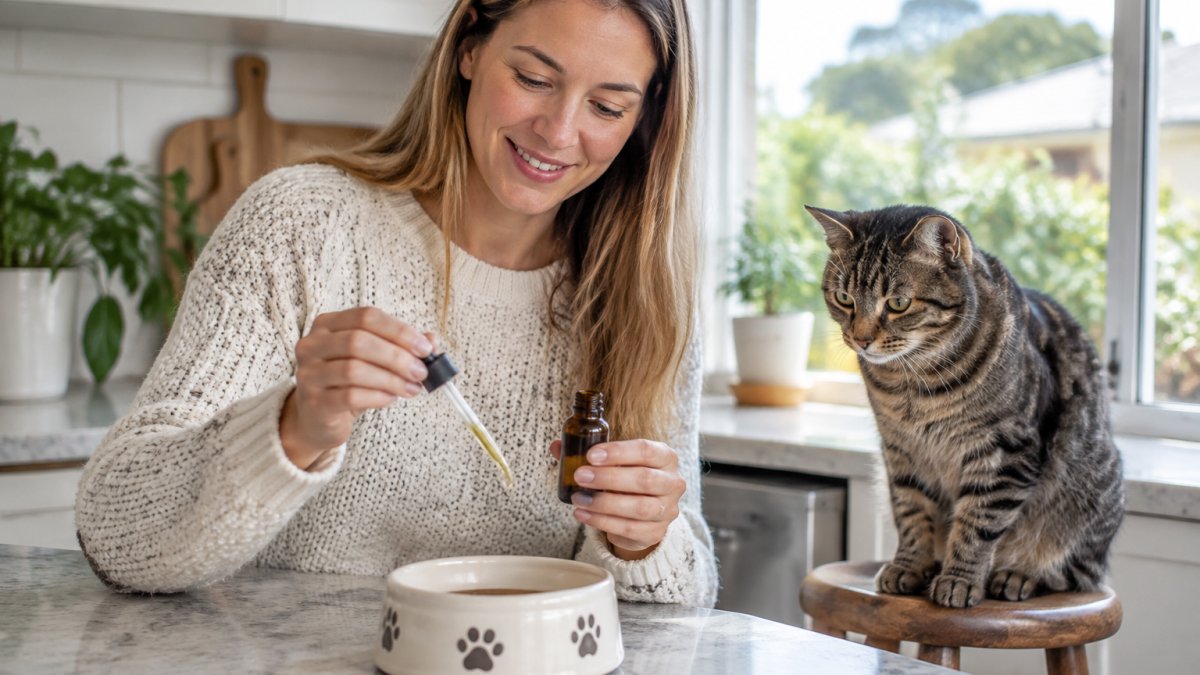
If your dog turns their nose up at oil, try a smaller amount mixed through warm water or a spoon of wet food. Our step-by-step guide to giving hemp seed oil to dogs has more options for fussy eaters.
When to Stop and Ask
If your pet vomits, has diarrhoea, loses appetite or develops a rash after starting anything new, pause and ring your vet. Those signs are not always caused by the oil, but they are worth checking as they could be a sign of an allergic reaction. The same applies if your pet is on medication, has a diagnosed condition, is pregnant or nursing, or is booked for surgery. A quick conversation with your vet is good practice before starting any new supplement.
Choosing a Bottle: Sizes, Quality and Label Checks
Choosing well comes down to three things: what is in the bottle, how it was pressed, and whether the size suits your household. Here is how the FortunatePaws sizes compare.
Size |
Best For |
Price |
|---|---|---|
30mL |
First bottle or trial |
$12.50 |
120mL |
Standard daily use |
$19.95 |
120mL two-pack |
Multi-pet homes, regular use |
$36.90 |
500mL |
Large dogs, multi-pet homes |
$65.00 |
On the label, look for "100% cold-pressed hemp seed oil" and nothing else. Our hemp seed oil is 100% Australian cold-pressed, human-grade, and comes in a 30mL size for a smaller first try.
When to Ask Your Vet First
Ask your vet before starting hemp seed oil if your pet is on medication, has a diagnosed condition, is pregnant or nursing, or is booked for surgery. That is not a disclaimer, it is good practice. Fat supplements can interact with how some drugs are absorbed.
Signs that need a vet rather than a supplement:
- Sudden or severe itching, or skin that is broken and weeping
- Limping that appears overnight or worsens over a week
- Vomiting, diarrhoea or appetite loss after starting anything new
Hemp seed oil is a nutritional supplement. It does not treat or cure disease, and it is never a reason to stop prescribed medication without guidance.
Start With a Small Bottle from FortunatePaws
The sensible first step is a small bottle, a slow introduction, and a few weeks of watching. That is how most of our customers start, and it is why we offer the 30mL size alongside the larger bottles.
We are a family-run Australian small business, and our hemp seed oil is dispatched from Western Australia. It is 100% pure, cold-pressed, human-grade, and made for both dogs and cats. Rated 4.8 stars from 1,476 reviews.
Explore the full hemp seed oil range for pets and pick the size that matches your household.
If you have been putting off trying a supplement because you were not sure where to start, start small. A 30mL bottle costs less than a bag of treats and tells you everything you need to know about whether your pet will accept it.
Frequently Asked Questions
What is hemp seed oil for pets?
It is a nutritional supplement made from cold-pressed hemp seeds, naturally rich in essential fatty acids including omega-3 and omega-6. It is a food oil, not a medicine, and is used to support general wellbeing in dogs and cats as part of a balanced diet. Quality matters, so look for a pure, cold-pressed oil with no fillers or additives and a clear ingredient list on the label.
Can cats have hemp seed oil?
Yes, hemp oil for cats is suitable when given in appropriate amounts. Cats are smaller than most dogs, so start with a small serving and watch how your cat responds. Some cats are fussy about oil on their food, so try mixing a little into wet food rather than dry kibble. If your cat has a health condition or is on medication, speak to your vet before adding any supplement.
How long does it take to see results?
Nutritional supplements work gradually because they support the diet over time rather than acting quickly. Responses vary between pets, so keep a simple note of what you observe over several weeks of consistent daily use. Keep a simple note of what you observe, give it consistently, and reassess after a month or so. If you see no change or your pet seems worse, talk to your vet.
When should you ask a vet before adding a supplement?
Ask your vet first if your pet is on medication, has a diagnosed condition, is pregnant or nursing, or is about to have surgery. Also check before use if your pet has recurring itching, stiffness or digestive upset, since these can have several causes and need proper assessment. A vet can confirm whether a supplement is appropriate alongside your pet's current care.