Last Updated: October 24, 2026
Quick Summary
A cat stressed at home often shows behavioural changes like hiding, loss of appetite, or litter box problems. Common triggers include environmental changes, loud noises, lack of hiding spots, and disruptions to routine. Creating a safe space, maintaining consistent schedules, and providing enrichment can help your cat feel calm and secure again.
- Cats' hearing is roughly twice as sensitive as humans', making loud noises genuinely distressing to them.
- A stressed cat needs at least one elevated spot, enclosed spaces, and a quiet area away from main living spaces.
- Feed your cat at the same times each day and make gradual changes to routine over several weeks rather than sudden shifts.
- Aim for at least two 10-minute play sessions daily to release tension and keep her mentally stimulated.
- See your vet if stress persists for several weeks, your cat stops eating, or shows signs of illness like vomiting or hair loss.
Table of Contents
- Understanding why your cat is stressed at home
- Common signs of stress in cats
- Main causes of stress in cats
- How to calm a stressed cat at home
- Calming products for cats that may help
- When to consult your veterinarian
- Supporting your cat's emotional wellbeing
- Frequently Asked Questions
Understanding why your cat is stressed at home
When your cat is stressed at home, she often shows you something's not quite right. Maybe she's hiding more than usual, or her usual playfulness has disappeared.
Stress in cats isn't something to ignore. It can affect their eating habits, their litter tray behaviour, and even their health over time (Stress in owned cats: behavioural changes and welfare implications).
Your cat's home should be her safe space. When something disrupts that feeling of safety, her behaviour changes.
Common signs of stress in cats
Spotting stress early makes a real difference.
Behavioural changes often appear first. Your cat might hide away more than usual, especially in cupboards, under beds, or behind furniture.
Physical signs can include:
- Excessive grooming or fur loss
- Loss of appetite or changes in eating habits
- Litter box problems (going outside the box, or avoiding it altogether)
- Vomiting or digestive upset
- Dilated pupils or flattened ears
Social changes are telling too. A friendly cat might become distant or aggressive. She might avoid interaction with you or other pets.
Restlessness is another signal. Your cat might pace around, seem unable to settle, or sleep more than usual.
If your cat shows any of these signs, it's worth investigating what might be causing her stress.
Main causes of stress in cats
Environmental changes and disruptions
Cats thrive on consistency. When their environment changes suddenly, many become stressed. Moving house is one of the biggest triggers, but even smaller changes can affect sensitive cats.
New furniture, rearranged rooms, or renovations can all disrupt your cat's sense of familiarity. She's learned where everything is and how her space works. When that changes, it feels unsafe.
Other environmental changes include:
- New pets arriving in the home
- Family members moving in or out
- Changes to your work schedule that affect her routine
- Temporary visitors or houseguests
- Building work or loud noises from outside
Even changes that seem minor to us can feel major to a cat. Her world is small and intimate. When it shifts, she needs time to adjust.
Noise and sensory overload
Cats have sensitive hearing. Loud or unexpected noises stress them out far more than they stress us. A cat's hearing is roughly twice as sensitive as a human's, which means sounds we barely notice can be genuinely distressing to her.
Common noise triggers include:
- Vacuum cleaners and other appliances
- Thunderstorms and fireworks
- Loud music or television
- Building or renovation sounds
- Neighbours' dogs barking
- Visitors and social gatherings
Some cats also struggle with visual changes. Bright lights, flickering screens, or sudden movements can trigger anxiety. Sensory overload happens when multiple stressors pile up at once.
If your cat hides during storms or when you have guests over, noise and sensory overwhelm are likely culprits. Creating a quiet, calm retreat space helps enormously.
Lack of space and hiding spots
Cats need places to hide and feel secure. Without them, stress builds up. A cat without access to high spots, enclosed spaces, or quiet corners feels exposed and vulnerable.
Your cat needs:
- At least one elevated spot where she can observe her territory safely
- Enclosed spaces like cat beds, boxes, or tunnels
- A quiet area away from the main living space
- Access to all her resources (litter box, food, water) without feeling trapped
If your home feels cramped or your cat shares space with other pets or people without escape routes, she'll feel stressed. Multi-cat households are particularly tricky. Each cat needs her own territory and resources.
Changes to routine and territory
Cats are creatures of habit. They know when you wake up, when you leave, when you come home.
When your routine shifts, your cat's sense of security shifts too. Working from home suddenly, then returning to the office. Holiday periods when you're home more than usual.
Territory matters too. If another cat or pet enters her space, she feels her territory is threatened. If you've moved or rearranged rooms, she's lost her familiar landmarks.
Understanding what triggers your cat's stress is the first step to helping her feel better.
| Cause | What happens | How it affects your cat |
|---|---|---|
| Environmental changes | Moving house, new furniture, renovations | Disrupts her sense of familiarity and safety |
| Noise and sensory overload | Vacuum cleaners, thunderstorms, visitors | Her hearing is twice as sensitive as humans' |
| Lack of hiding spots | No elevated areas or enclosed spaces | She feels exposed and vulnerable |
| Changes to routine | Different feeding times, work schedule shifts | Loses her sense of security and predictability |
| New pets or people | Family members moving in or out | Her territory feels threatened |
| Loud appliances | Television, music, building sounds | Causes genuine distress to sensitive ears |
How to calm a stressed cat at home
Create a safe, quiet space
When your cat is stressed at home, she needs a dedicated refuge. This is a space where she can retreat when she feels overwhelmed, away from noise, activity, and other pets.
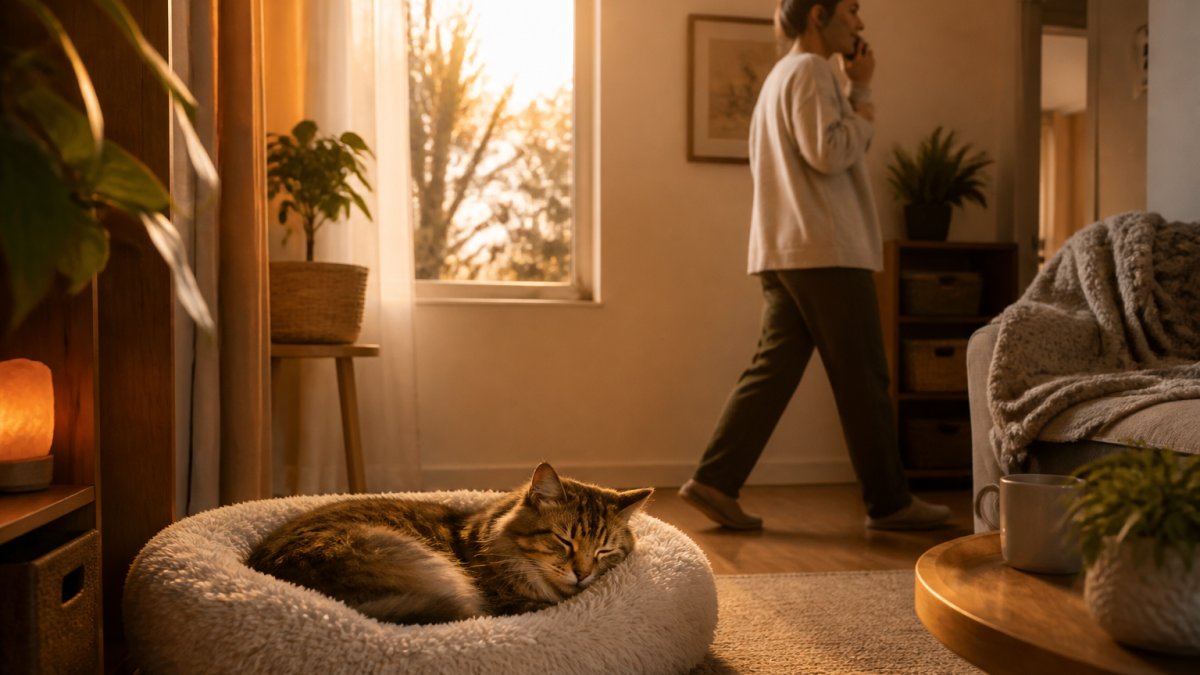
Set up a safe room or corner with:
- A comfortable bed or blanket
- Her litter box placed away from her sleeping and eating areas
- Fresh water and food bowls
- Toys and enrichment items
- A window for natural light if possible
- Minimal foot traffic and interruptions
Keep this space quiet and calm. Don't force your cat to spend time there, but make it inviting. Many cats will naturally retreat to a safe space when they need to decompress.
Dim lighting helps. Natural light is ideal, but if that's not possible, soft artificial lighting works too. Avoid bright overhead lights in her refuge.
MellowPet Omega Drops 30ml | Stress Relief for Dogs & Cats →
Maintain a consistent daily routine
Predictability reduces stress. Feed your cat at the same times each day. Play with her at consistent times. Keep your own schedule as regular as possible, even if it's just in the times you're home.
Consistency matters in:
- Feeding times and portion sizes
- Play and interaction schedules
- Sleep and rest times
- Litter box cleaning
- Your own daily patterns
If you work irregular hours or your schedule is unpredictable, try to keep your cat's routine as stable as possible. Feed her at the same times regardless of when you wake up.
Gradual changes are better than sudden ones. If you need to shift her routine, do it slowly over several weeks. A cat adjusted to 6 PM feeding won't adapt well to 8 PM overnight.
Provide enrichment and play
A bored cat is often a stressed cat. Enrichment keeps her mind occupied and gives her healthy outlets for natural behaviours.
Good enrichment includes:
- Interactive toys and games with you
- Puzzle feeders that make her work for food
- Window perches for bird watching
- Climbing structures and cat trees
- Rotating toys to keep things fresh
- Scratching posts and pads
Play sessions help release tension. Aim for at least two 10-minute sessions daily. Use toys that mimic hunting behaviours, like feather wands or small balls.
Some cats enjoy catnip or silvervine toys. Others prefer laser pointers or balls. Experiment to find what your cat enjoys most. The goal is to give her something to do and help her feel stimulated and engaged.
Calming products for cats that may help
When environmental changes and routine adjustments aren't quite enough, some cat parents find that natural calming products offer additional support.
Research on feline anxiety and environmental stress shows that cats respond well to consistent, gentle support during stressful periods.
MellowPet Omega Drops are formulated to support calmness and relaxation in cats. They combine hemp seed oil with a carefully selected blend of calming terpenes.

The drops are easy to give. You can add them to her food or give them directly.
Veterinary behavioural guidance on stress management recommends a multi-faceted approach to feline stress.
You might explore our calming products for cats that may help to see what options are available. Many cat parents find that MellowPet Omega Drops 30ml | Stress Relief for Dogs & Cats is a good starting point, particularly for trial periods or households with one cat.
For broader wellness support as part of your cat's daily routine, Hemp Seed Oil For Pets may be a helpful addition to a balanced diet, supporting overall wellbeing and healthy skin and coat.

When to consult your veterinarian
Some stress is normal. But if your cat's behaviour changes significantly or persists, a vet visit is important. Your vet can rule out medical issues that might be causing or contributing to stress.
See your vet if your cat:
- Stops eating or eats much less than usual
- Has ongoing litter box problems
- Shows signs of illness (vomiting, diarrhoea, lethargy)
- Becomes aggressive or unusually withdrawn
- Over-grooms to the point of hair loss
- Shows no improvement after several weeks of environmental changes
Your vet can also discuss whether your cat might benefit from additional support. They know your cat's health history and can make personalised recommendations.
If your cat has always been anxious, or if stress seems severe, your vet might refer you to a feline behaviourist. These specialists can identify specific triggers and create a tailored plan.
Supporting your cat's emotional wellbeing
Your cat's emotional health matters as much as her physical health. Hemp Seed Oil For Pets may support overall wellbeing and coat health as part of a holistic approach to her care.
Supporting her starts with understanding her individual personality and needs. Some cats are naturally more anxious. Others are laid-back. Your approach should match your cat.
Be patient. Helping a stressed cat feel secure takes time. Environmental changes, routine adjustments, and enrichment all work together. You won't see overnight results, but consistent effort pays off.
Many cat parents find that combining practical changes with natural support gives their cats the best chance of feeling calm and secure.
Your cat relies on you to help her feel safe.
Helping your cat feel calm at home is one of the most rewarding things you can do as a pet parent. By identifying the cause of her stress and making thoughtful changes, you're setting her up for a happier, more settled life. If you'd like to explore natural support options alongside these practical steps, discover the calming products for cats that may help available through FortunatePaws.
Frequently Asked Questions
What are the main signs of stress in cats?
Stressed cats often show changes in behaviour such as hiding more than usual, reduced appetite, excessive grooming, or litter tray issues. You might notice them being quieter, more aggressive, or overly clingy. Some cats develop destructive habits like scratching furniture excessively. If your cat's behaviour shifts noticeably, it's worth investigating what might be causing them stress.
How can I help my cat feel safe at home?
Create a dedicated safe space with hiding spots, a comfortable bed, and access to food and water away from household activity. Keep their routine consistent, minimise loud noises, and give them control over their environment. Cats feel safer when they can retreat and observe without pressure. Spending quiet time near them without forcing interaction also builds confidence and trust.
Can calming products for cats really help reduce stress?
Yes, natural calming products may help support relaxation during stressful situations. MellowPet Omega Drops, for example, combine hemp seed oil with calming terpenes to help support emotional wellbeing in cats. These work best alongside environmental changes, a product alone won't solve stress if the underlying cause remains. They're most effective when combined with a safe space, routine, and patience.
When should I take my stressed cat to the vet?
If your cat's stress persists beyond a few weeks, or if they stop eating, have litter tray problems, or show signs of illness, see your vet. Stress can mask underlying health issues, and a vet can rule out medical causes. They can also advise on whether your cat needs additional support and recommend the best approach for your individual pet.