
Table of Contents
- Why Natural Dental Care for Pet Supplies Matters
- Signs of Dental Disease in Pets to Watch For
- How to Build a Pet Oral Hygiene Routine at Home
- How to Use Seaweed Powder for Pet Teeth
- Best Australian Dog Dental Chews and Natural Alternatives
- What to Look For in Natural Dental Care for Pet Supplies
- Frequently Asked Questions
Last Updated: September 17, 2026
Why Natural Dental Care for Pet Supplies Matters
Most pet owners notice bad breath long before they notice anything else. By then, plaque has usually been building for weeks. Natural dental care is the practice of supporting your pet's teeth, gums and breath through everyday habits and simple, low-stress products rather than waiting for a problem to become obvious.
At FortunatePaws, we hear from owners every week who feel guilty about this. The good news is that dental support is one of the easiest areas of pet care to improve, because it rewards consistency far more than intensity.
A common mistake is treating dental care as a once-a-month job. It isn't. Small daily actions beat occasional deep cleans every time.
Signs of Dental Disease in Pets to Watch For
Dental disease in pets usually develops gradually, and the earliest signs are easy to dismiss as normal ageing. Watch for changes in eating habits, breath and behaviour rather than waiting for visible damage.
Early Warning Signs Most Owners Miss
- Bad breath that builds over weeks rather than appearing suddenly
- Dropping food, chewing on one side, or hesitating over hard kibble
- Yellow-brown build-up along the gum line
- Red or puffy gums, or a little blood on a chew toy
- Pawing at the mouth or rubbing the face along furniture
- Reluctance to let you near the muzzle
What most guides miss is that pain in pets is often quiet. A dog with sore gums rarely yelps. They just eat a little slower, or leave the last few biscuits in the bowl.
When to Book a Vet Visit
Book a vet visit if you see bleeding gums, loose teeth, a swollen face, drooling that wasn't there before, or a pet that stops eating altogether. These aren't things a supplement or a chew can address, and delaying only makes treatment harder.
For everything else, home care is where the real, steady progress happens. Your vet can check what's going on beneath the surface and advise on what's appropriate for your pet's age and health.
How to Build a Pet Oral Hygiene Routine at Home
A workable pet oral hygiene routine is short, predictable and built around your pet's tolerance, not a perfect ideal. Aim for two minutes of contact time most days, and accept that some pets will only ever tolerate part of it.
Start with these steps:
- Let your pet lick a pet-safe toothpaste off your finger for a few days
- Slide a finger along the outer gum line for five seconds, then stop
- Swap to a soft pet toothbrush with a small head
- Brush the outer surfaces only, in slow circles, focusing on the back teeth
- Finish with a reward, every single time
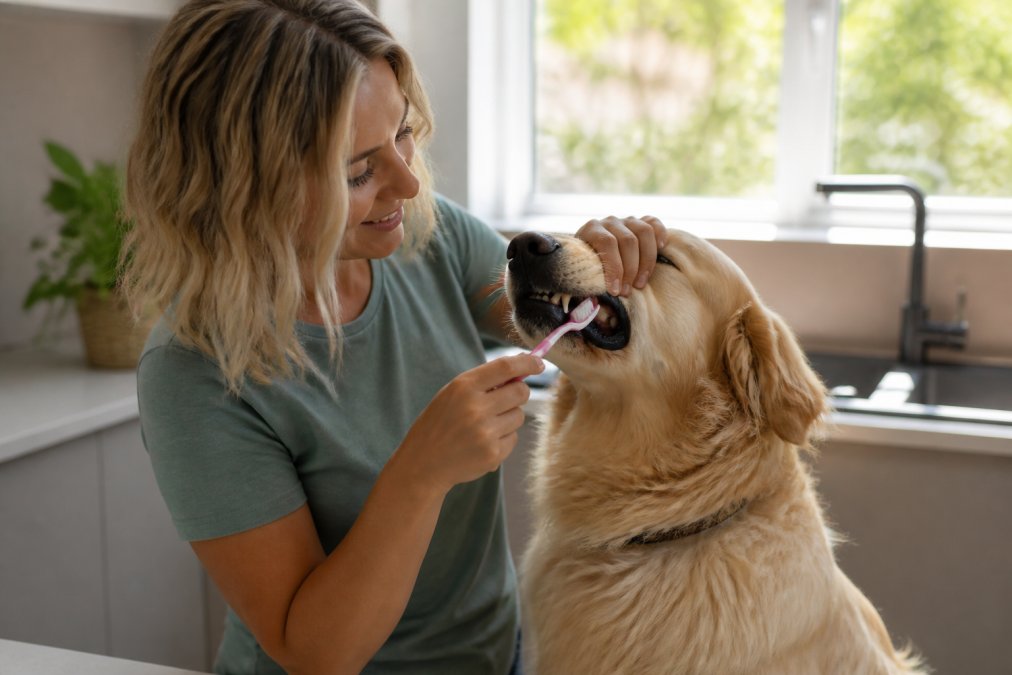
Skip human toothpaste. It contains ingredients pets shouldn't swallow, and they can't spit. A vet or pet retailer can point you to a pet-specific option.
How to Use Seaweed Powder for Pet Teeth
Seaweed powder is a dried, ground kelp supplement that you sprinkle over your pet's food each day. It works through the saliva, so it reaches the whole mouth rather than just the surfaces you can brush. It's the lowest-effort option for pets who won't tolerate a toothbrush.
To use it:
- Check the label for the recommended daily amount for your pet's size
- Sprinkle it over wet food, or mix it through a little warm water
- Serve it at the same meal every day
- Give it several weeks of consistent use before judging results
- Keep brushing where your pet allows it
Choosing the Right Seaweed Powder
Look for a single-ingredient product with no fillers, additives or preservatives. The species matters too: Ascophyllum nodosum is the one most commonly used for oral support in pets, and you want it sustainably harvested from clean, cold water.
FortunatePaws KelpClean is made from 100% Ascophyllum nodosum, sourced from a trusted supplier and wild-harvested to strict environmental standards. It's a simple sprinkle-over-food option for both dogs and cats. Simply Seaweed offers the same single-ingredient approach in a 40g trial size or a 200g tub.

|
Product |
Size |
Best For |
Key Point |
|---|---|---|---|
|
Simply Seaweed 40g |
40g |
First-time trialling |
Single ingredient, small tub |
|
Simply Seaweed 200g |
200g |
Regular daily use |
Single ingredient, larger tub |
|
60g |
First-time trialling |
100% Ascophyllum nodosum, no fillers |
|
|
200g |
Consistent use, dogs and cats |
Best value for money |
Best Australian Dog Dental Chews and Natural Alternatives
A good dental chew is one your dog can actually work at, not one they swallow in ten seconds. Texture and size matter more than packaging claims, and a chew that's too small for your dog is a choking risk rather than a dental aid.
What to look for:
- A shape that encourages chewing at the back teeth
- Enough resistance to massage the gums without cracking a tooth
- Single-ingredient or short ingredient lists
- A size matched to your dog's weight
- No rawhide, which is usually bleached and can swell and cause blockages
Natural alternatives work alongside chews rather than replacing them. Shark cartilage is a firm, satisfying chew that gives dogs real gnawing time, and it's a single-ingredient option. FortunatePaws Shark Cartilage comes in 120g and 250g bags, and it's included in the Dental Health Bundle alongside KelpClean and a 120ml bottle of Hemp Seed Oil.

That bundle is worth a look if you'd rather set up one routine than assemble four separate products. The hemp seed oil is cold-pressed and rich in omega-3, 6 and 9 fatty acids, which may help support skin, coat and general wellbeing as part of a balanced diet.
What to Look For in Natural Dental Care for Pet Supplies
Short ingredient lists are the single best signal when you're shopping for natural dental care for pet supplies. If you can't pronounce half the label, it probably isn't doing your pet any favours.
Check for:
- A named active ingredient, such as Ascophyllum nodosum
- No added colouring, preservatives or fillers
- Clear daily feeding directions on the pack
- Suitability stated for your pet's species and size
- A supplier you can contact if you have questions
FortunatePaws is a family-run Australian small business, with products dispatched to all areas within Australia. Our dental range is built on clean, simple ingredients with no unnecessary fillers.
Bad breath and tartar build-up rarely fix themselves, and by the time they're obvious, you're already playing catch-up. The practical path is a short daily routine: a seaweed powder sprinkled over food, a chew that gives real gnawing time, and brushing wherever your pet allows it.
FortunatePaws makes that easy to set up in one step. The Dental Health Bundle pairs KelpClean, Australian Shark Cartilage and cold-pressed Hemp Seed Oil so you have dental support and everyday wellness covered together, backed by a 4.8-star rating from 1,476 reviews.
Explore the FortunatePaws dental range and build a routine your pet will actually accept.
Frequently Asked Questions
How can I clean my dog's teeth naturally?
Start with a soft pet toothbrush and pet-safe toothpaste, brushing gently along the gum line a few times a week. Add natural dental care for pet supplies such as seaweed powder sprinkled over food, and offer dental chews that encourage chewing. Fresh water and regular checks help too. If your dog resists brushing, begin with short sessions and build up slowly, rewarding calm behaviour along the way.
Does seaweed powder help with pet dental health?
Seaweed powder made from Ascophyllum nodosum may help support healthy teeth and gums, and may help reduce plaque and tartar build-up as part of a daily routine. Simply sprinkle the recommended amount over your pet's food. It is not a replacement for a product, so keep up regular check-ups and watch for any changes in your pet's mouth between visits.
What are the signs of dental disease in pets?
Common signs include bad breath, yellow or brown build-up on teeth, red or swollen gums, drooling, dropping food, chewing on one side, and pawing at the mouth. Some pets become quieter or eat less. If you notice any of these, book a vet visit. Early attention is far easier on your pet than waiting until problems become painful or advanced.
How often should I check my pet's teeth and gums?
Aim to check your pet's mouth once a week. Lift the lip gently and look for redness, tartar, broken teeth or unusual odours. Pair this with a pet oral hygiene routine that includes brushing a few times a week and a daily dental supplement. Regular checks help you spot small changes early, when they are simplest to address.