
Table of Contents
- Why Nutrient-Dense Food Matters for Your Pet
- A Pet Food Transition Schedule That Works
- Step-by-Step Guide to Transitioning Your Pet
- Recognising Signs of Food Allergies in Dogs
- How to Introduce Meal Toppers for Dogs
- Common Challenges and How to Overcome Them
- Conclusion
- Frequently Asked Questions
Last Updated: 29 September 2026
Why Nutrient-Dense Food Matters for Your Pet
Learning how to transition pets to nutrient dense food can be one of the best decisions you make for their long-term health. But here's what most pet parents get wrong: they rush the change. A sudden switch often leads to digestive upset, and your pet ends up back on their old food before you've given the new one a fair chance.
How to transition pets to nutrient dense food properly takes time and patience. The process isn't complicated, but it does require a structured approach. When done right, your dog or cat will thrive on better nutrition without the stomach troubles that derail most attempts.
A slow, gradual transition works almost every time. Your pet's digestive system needs time to adjust to new ingredients and nutrient profiles. This guide walks you through exactly how to do it.
Why does nutrient density matter? Better food means better skin and coat, steadier energy levels, and improved overall wellbeing.
A Pet Food Transition Schedule That Works
The standard pet food transition schedule spans three weeks. This timeframe gives your pet's gut bacteria time to adapt to new ingredients without causing discomfort.
Here's the basic framework:
Week |
Old Food |
New Food |
Purpose |
|---|---|---|---|
Week 1 |
75% |
25% |
Introduction and tolerance check |
Week 2 |
50% |
50% |
Gradual adjustment |
Week 3 |
25% |
75% |
Final transition phase |
Week 4+ |
0% |
100% |
Complete switch |
Some pets need a slower pace. Senior dogs, cats with sensitive stomachs, or pets with a history of digestive issues may benefit from a four to six week transition instead. Watch your pet's response and adjust accordingly.
The key is consistency. Feed the same ratio at the same times each day. This predictability helps your pet's digestive system settle into the new routine.
Step-by-Step Guide to Transitioning Your Pet
Week One: The Gradual Mix
Start by mixing 25% of the new food with 75% of your pet's current food. This gentle introduction lets their digestive system recognise and adapt to the new ingredients without shock.
What to do:
- Measure out your pet's normal portion size
- Replace one-quarter of the old food with the new food
- Mix thoroughly so both foods blend together
- Feed this mixture for 7 days, once or twice daily depending on your pet's schedule
- Watch for any changes in digestion, appetite, or energy
Most pets show no issues at this stage. If your pet has a sensitive stomach, they might have slightly softer stools. This is normal. However, if vomiting or severe diarrhoea occurs, pause the transition and consult your vet.
Week Two: Increasing the New Food
By week two, increase to a 50/50 mix. Your pet's digestive system has had time to adjust, and now you're introducing more of the new food.
What to do:
- Mix equal parts old and new food
- Continue for another 7 days
- Maintain the same feeding schedule
- Monitor your pet's coat, energy, and digestion
Many pet parents may notice improvements during this week. Coats may become shinier, energy levels may stabilise, and digestion may settle into a rhythm. These can be signs the new food is working well.
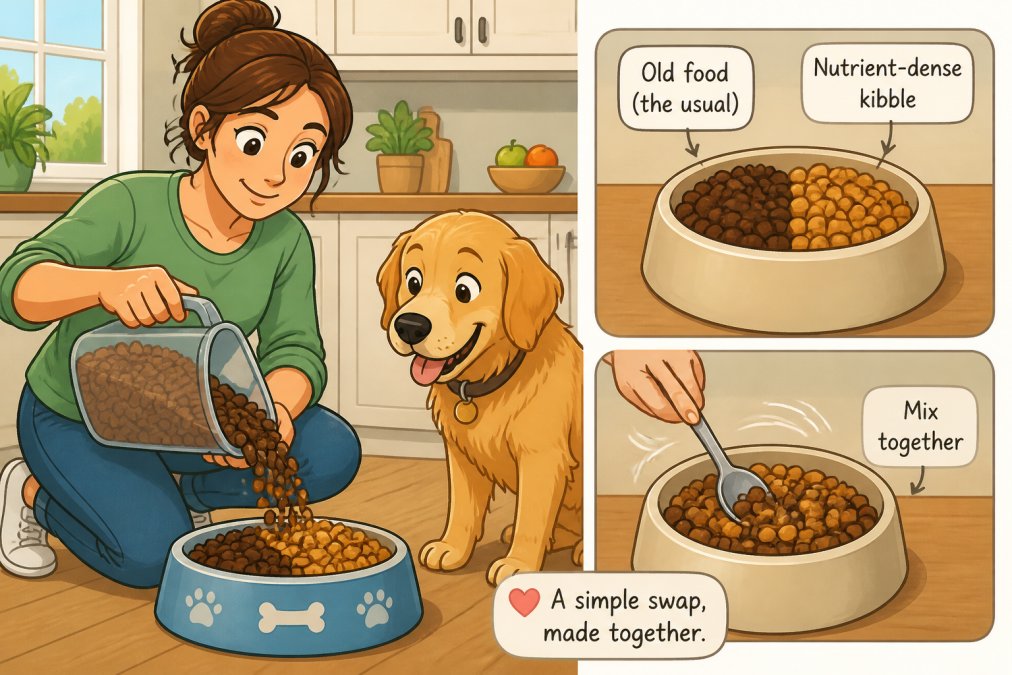
Pet owner pouring nutrient-dense kibble into a dog's bowl alongside the old food, showing the mixing process in a bright home kitchen setting.
Week Three and Beyond: Full Transition
In week three, shift to 75% new food and 25% old food. Your pet is nearly there.
What to do:
- Mix three parts new food with one part old food
- Feed for 7 days
- By day 8, transition to 100% new food
- Continue monitoring for another week to ensure everything is stable
Some pets need an extra week at the 75/25 stage. If your pet is doing well, you can move to 100% new food. If digestion seems a bit off, hold at 75/25 for another few days.
Recognising Signs of Food Allergies in Dogs
Signs of food allergies in dogs can appear during or after a food transition. Knowing what to watch for helps you distinguish between normal adjustment and a genuine allergic reaction.
Common signs include:
- Persistent itching or scratching, especially around the ears, paws, or face
- Red or inflamed skin patches
- Chronic ear infections or head shaking
- Vomiting or diarrhoea that lasts more than a few days
- Excessive licking or chewing at the paws
- Hair loss or thinning coat
- Facial swelling or hives
If you notice any of these, pause the transition and return to the previous food ratio. Contact your vet before continuing. Some pets do have genuine sensitivities to specific ingredients. Your vet can help identify which foods work best for your dog.
How to Introduce Meal Toppers for Dogs
How to introduce meal toppers for dogs adds another layer of nutrition without complicating the transition process. Toppers work best once your pet is fully adjusted to their new base food.
Wait until week four or five before adding toppers. This gives your pet's digestion time to settle on the new base food first.
When you're ready to add a topper:
- Choose a single-ingredient topper like beef liver flakes or mussel flakes
- Start with a small amount, about a teaspoon for cats, a tablespoon for small dogs
- Mix it into the food so it blends with the kibble
- Watch for any digestive changes over the next few days
- If all goes well, you can increase the amount gradually
FortunatePaws offers natural meal toppers like Beef Liver Flakes with Hemp and Mussel Flakes that complement any balanced diet. These toppers add real nutrition without fillers or artificial ingredients. The Beef Liver Flakes are naturally rich in iron and B vitamins, while Mussel Flakes are naturally rich in omega fatty acids, glucosamine, and chondroitin, which may support healthy joints, mobility, and daily comfort.

Toppers are especially useful for picky eaters. A small amount of flavourful topper often encourages pets to finish their bowl, even if they're hesitant about the new base food.
Common Challenges and How to Overcome Them
Picky eating: Some pets refuse the new food outright. Mix the new food with something they love, a small amount of wet food, bone broth, or a natural meal topper. Once they accept the mixture, gradually reduce the flavour boost.
Loose stools: This is the most common issue during transition. It usually passes within a few days as digestion adjusts. If it persists beyond a week, slow down the transition. Move from week 1 to week 2 over 10 days instead of 7.
Vomiting: Occasional vomiting during transition can happen, but repeated vomiting means something's not right. Return to the previous ratio and progress more slowly. If vomiting continues, contact your vet.
Refusing to eat: Some pets are stubborn about change. Try warming the food slightly to release more aroma, or hand-feed a few pieces to show it's safe. Never force it. If your pet refuses food for more than 24 hours, consult your vet.
Sudden hunger or weight loss: A nutrient-dense food often means your pet needs less volume to feel satisfied. If your pet seems hungry, check the feeding guidelines on the new food's packaging. You might actually be feeding more than recommended.
Conclusion
Transitioning your pet to nutrient-dense food doesn't have to be stressful. Follow the three-week schedule, watch for signs of adjustment, and be patient. Most pets thrive once they're on better nutrition.
Ready to support your pet's nutrition journey? Explore the FortunatePaws range of natural meal toppers and supplements designed to complement a balanced diet. From Beef Liver Flakes rich in essential nutrients to Mussel Flakes packed with joint-supporting omega fatty acids, we offer simple, clean ingredients to help your pet thrive. Find the right topper for your companion today.
Frequently Asked Questions
Why is it important to transition pet food slowly?
A gradual transition gives your pet's digestive system time to adjust to the new food. Switching too quickly can cause upset stomach, vomiting, or diarrhoea. Your pet's gut bacteria need time to adapt to different ingredients and nutrient profiles. A slow transition also helps you spot any signs of food sensitivities or allergies before committing fully to the new food.
How long should the transition period to nutrient-dense food take?
Most pets do well with a three-week transition period. Start with 25% new food mixed with 75% old food for the first week, increase to 50/50 in week two, then 75% new and 25% old in week three. Some pets with sensitive digestion may need four weeks. Watch your pet's stools and energy levels—if they seem unsettled, slow the process down.
What are the signs that my pet is struggling with a new diet?
Watch for soft stools, diarrhoea, vomiting, reduced appetite, or excessive gas. Some pets may seem lethargic or have itchy skin. These signs usually appear within the first week if there's an issue. If symptoms persist beyond a few days, return to the previous food and consult your vet. It's also worth checking whether your pet has a sensitivity to a specific ingredient in the new food.
Can meal toppers help with the transition to nutrient-dense food?
Yes, meal toppers can make the transition easier, especially for picky eaters. Natural toppers like beef liver flakes or mussel flakes add flavour and nutrition, encouraging your pet to eat the new food. They also boost the overall nutrient density of each meal without requiring a complete diet overhaul. Start with small amounts sprinkled over the mixed old and new food to build interest.