
Table of Contents
- Signs of Skin Irritation in Dogs to Watch For
- Why Your Dog Keeps Scratching: Common Causes
- Natural Dog Grooming Tips for Itchy Skin
- Hemp Seed Oil for Dogs With Itchy Skin
- Dog Allergy Treatment: Natural Options to Try at Home
- When to See Your Vet About Dog Scratching
- Conclusion
- Frequently Asked Questions
Last Updated: September 16, 2026
Signs of Skin Irritation in Dogs to Watch For
Knowing how to stop dog scratching naturally at home starts with recognising what healthy skin looks like, and what it doesn't. Occasional scratching is normal. Constant scratching, chewing or licking is your dog telling you something is irritating their skin, and catching the early signs makes the whole process easier.
Watch for these common signals:
- Redness, rashes or hot spots on the belly, paws, ears or underarms
- Dry, flaky or scurfy skin, especially along the back
- Excessive licking or chewing at the paws, often leaving them stained brown
- Hair thinning or bald patches where your dog scratches most
- A dull, greasy or unpleasant-smelling coat
- Head shaking or ear scratching, which can point to irritation in the ear canal
One sign on its own may be nothing. Several together, or one that keeps getting worse, usually means it's worth investigating. The team at FortunatePaws hears from pet parents every week who noticed the licking first and the redness second, which is why a simple weekly check of your dog's coat and skin pays off.
Why Your Dog Keeps Scratching: Common Causes
Identifying the cause is the single most useful step, because a dog scratching from fleas needs a different approach to one scratching from a food sensitivity. Most cases trace back to one of a handful of culprits.
Parasites top the list. Fleas, mites and lice all cause intense itching, and flea allergy dermatitis can set off a reaction from a single bite. Check the base of the tail and the belly for flea dirt, small dark specks that turn reddish when wet.
Environmental allergies are common and often seasonal. Pollen, grass, dust mites and mould spores can all trigger itchiness, particularly on the paws, face and belly.
Food sensitivities tend to show up year-round rather than seasonally, often alongside digestive upset.
Dry skin from winter heating, frequent bathing with harsh shampoos or simply age can leave the skin barrier compromised and itchy.
Contact irritation from garden chemicals, certain fabrics or strong cleaning products is easy to overlook but straightforward to rule out.
If your dog's itching is seasonal, allergies are the likely driver. If it's constant and paired with an upset stomach, food is worth investigating first.
Natural Dog Grooming Tips for Itchy Skin
Good grooming habits do a lot of quiet work here. The goal is simple: keep the coat clean, keep the skin's natural oils intact, and avoid anything that strips the barrier further.
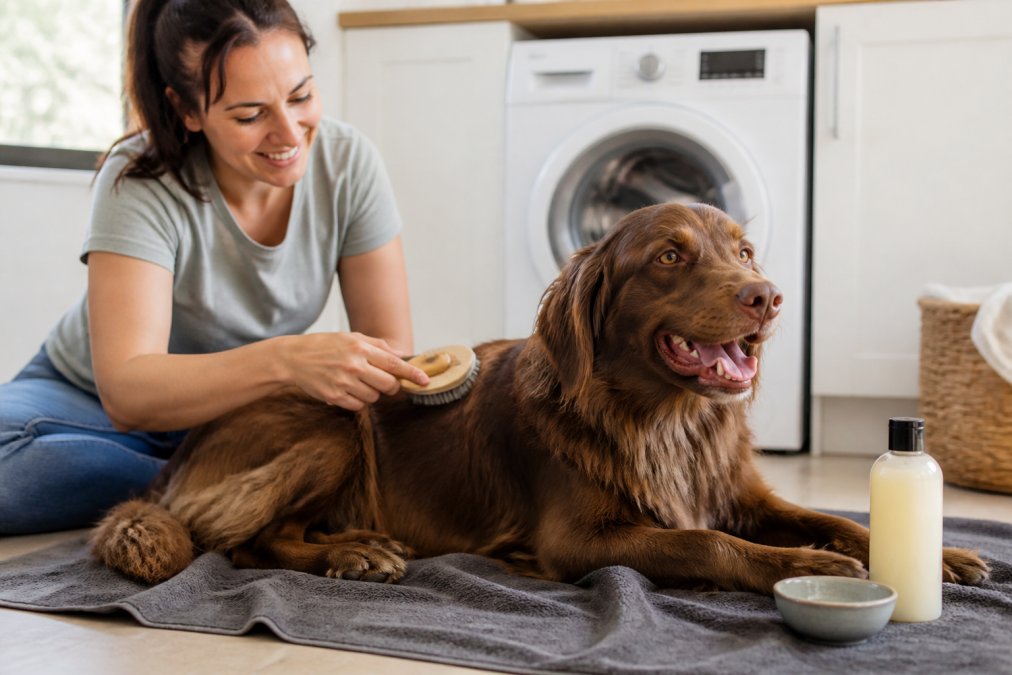
A pet owner gently brushing a relaxed dog with a soft grooming brush on a towel in a bright home laundry, with a bottle of pet shampoo nearby
Start with the right brush. A soft slicker or rubber curry brush removes loose hair and dander without scraping irritated skin, and it lets you check for redness, lumps or hot spots as you go.
Bathe less often than you might think. Every four to six weeks suits most dogs, and a gentle, naturally derived shampoo is essential if your dog has sensitive skin. FortunatePaws Sensitive Pet Shampoo is made in small batches with human-grade ingredients and is designed to cleanse without stripping the coat's natural moisture. Follow with the matching Sensitive Pet Conditioner to help restore moisture and make brushing easier.


Dry your dog properly with a towel rather than leaving them damp, and keep up with flea prevention year-round.
Hemp Seed Oil for Dogs With Itchy Skin
Hemp seed oil for dogs with itchy skin is one of the most popular natural options, and it's worth understanding what it actually is. FortunatePaws Hemp Seed Oil is 100% pure, cold-pressed hemp seed oil for dogs and cats. It's a nutritional supplement naturally rich in essential fatty acids, including omega-3 and omega-6.
Hemp Seed Oil For Pets | Nutritional Support →
Those fatty acids are the reason it's used. Omega-3 and omega-6 support the skin's natural barrier, which is exactly the system that gets compromised when a dog scratches and chews. Many pet owners find that adding a good-quality oil to a balanced diet supports healthy skin and a shinier coat over time.
It's easy to give. Most dogs accept hemp seed oil drizzled over their regular meal, which sidesteps the pill-and-powder battle entirely. A smaller 30mL bottle works well as a trial size, while the 120mL and 500mL options suit regular use or multi-pet households.
Where a dog's itching is tied to stress or a change in routine, MellowPet Omega Drops combine hemp seed oil with a blend of calming terpenes to support calmness and relaxation. They are not a sedative and don't treat anxiety, but many owners find them a helpful addition during storms, travel or settling-in periods.
Dog Allergy Treatment: Natural Options to Try at Home
Natural dog allergy treatment at home focuses on reducing exposure and supporting the skin, rather than reaching straight for medication. Here's a practical order to work through.
- Wash bedding weekly in hot water to reduce dust mites and dander
- Wipe paws after walks to remove pollen and grass contact
- Vacuum regularly, including soft furnishings your dog uses
- Keep flea prevention current all year, not just in summer
- Add a skin-supporting supplement such as hemp seed oil or Bee Pollen, a Western Australian wholefood that may help support healthy skin and normal immune function
- Try an elimination diet for eight to twelve weeks if food sensitivity is suspected, working with your vet
Problem |
Natural Approach |
What to Expect |
|---|---|---|
Dry, flaky skin |
Omega-rich oil in daily meals |
Softer coat over several weeks |
Seasonal pollen itch |
Paw wiping and weekly bedding wash |
Reduced flare-ups in peak season |
Flea-related scratching |
Year-round flea prevention |
Itching settles once the cycle breaks |
Stress-related licking |
Calming support and routine |
Calmer behaviour in trigger situations |
Most natural approaches work gradually. Expect weeks, not days, and change one thing at a time so you can tell what's actually helping.
When to See Your Vet About Dog Scratching
Some cases need a vet, and knowing where that line sits saves your dog discomfort. Book an appointment if the scratching is severe enough to break the skin, if you notice bald patches, thickened or darkened skin, or a bad smell from the ears or coat.
Other reasons to seek veterinary advice:
- Your dog seems uncomfortable, restless or off their food
- Itching continues after several weeks of consistent home care
- You suspect a food allergy and want to plan an elimination diet properly
- Your dog is on existing medication
A vet can check for infections, parasites and underlying conditions that no supplement will fix. Natural support works best alongside a product, not instead of it, and never stop prescribed medication without your vet's guidance.
Conclusion
Persistent scratching is frustrating for your dog and for you, but the path forward is usually a steady one: identify the likely cause, tighten up grooming and flea prevention, and add nutritional support that gives the skin what it needs to repair.
FortunatePaws is a family-run Australian small business dispatching natural pet wellness products from Western Australia. Our Sensitive Pet Shampoo and Conditioner Pack makes gentle bathing simple, while our pure, cold-pressed hemp seed oil and Western Australian Bee Pollen offer straightforward nutritional support for skin and coat health. Rated 4.8 stars from 1,476 reviews by pet parents who wanted something gentler.

Sensitive Pet Shampoo & Conditioner Pack | 250ml or 500ml
Explore the FortunatePaws range of pure hemp seed oil and sensitive grooming products, and give your dog's skin the support it deserves.
Frequently Asked Questions
What can I put on my dog to stop them from scratching?
Start with gentle, pet-safe options: a soothing bath using a sensitive pet shampoo made for dogs and cats, a cool rinse, and a light brush to remove loose hair and dander. Adding a nutritional supplement such as pure hemp seed oil, which is naturally rich in omega-3 and omega-6 fatty acids, may help support healthy skin and coat as part of a balanced diet. Avoid human creams, essential oils and medicated products unless your vet recommends them.
Why is my dog scratching so much but has no fleas?
Flea-free scratching is common. Environmental allergies (pollens, grasses, dust mites), food sensitivities, dry skin, contact irritation from certain shampoos or surfaces, and even boredom or stress can all cause a dog to scratch. Checking for redness, dandruff, hot spots or hair loss helps narrow it down. If the scratching is constant, worsens at night, or comes with hair loss or broken skin, book a vet visit to rule out infection or a deeper allergy issue.
Are there natural supplements to help with dog skin health?
Yes. Nutritional support can complement a balanced diet. Pure hemp seed oil for dogs with itchy skin is naturally rich in essential fatty acids, including omega-3 and omega-6, and may help support healthy skin and a shiny coat. Bee pollen is another wholefood option that may help support skin, coat and normal immune function. Always introduce new supplements slowly and check with your vet, especially if your dog is on medication.
How often should I bathe my dog if they have itchy skin?
For most dogs with itchy or sensitive skin, a gentle bath every three to four weeks is a good starting point, using a small-batch, naturally derived shampoo made for sensitive skin. Bathing too often can strip natural oils and make itching worse, while going too long between baths lets allergens and dander build up. If your vet has recommended a specific medicated bath schedule, follow that instead.