
Table of Contents
- Why Dog Coat Health Matters
- Step 1: Assess Your Dog's Current Coat Condition
- Step 2: Feed a Balanced Diet Rich in Omega Fatty Acids for Dogs
- Step 3: Establish Dog Grooming Tips for Healthy Skin
- Step 4: How to Use Hemp Seed Oil for Dogs
- Step 5: Add Targeted Nutritional Support
- Step 6: Monitor Progress and Adjust Your Approach
- Common Mistakes to Avoid When Improving Coat Health
- Frequently Asked Questions
Last Updated: September 27, 2026
Why Dog Coat Health Matters
A healthy coat is one of the first signs that your dog is doing well overall, and there are practical steps you can take to improve dog coat health. When your dog's skin and fur are in good condition, it usually means their body is getting what it needs. A dull, flaky or itchy coat often signals something's missing, whether that's nutrition, proper grooming or both.
The good news is that improving dog coat health doesn't require expensive treatments or complicated routines. Most of the time, it comes down to three things: what you feed your dog, how you groom them, and whether you're giving their body the right nutritional support. Many Australian pet owners have seen real improvements in their dog's coat by making simple, targeted changes.
A shiny, soft coat isn't just about looks either. It protects your dog's skin from irritation and infection. When the coat is healthy, it's also easier to spot any skin problems early on. This guide walks you through exactly how to improve dog coat health step by step, with practical advice you can start using today.
Step 1: Assess Your Dog's Current Coat Condition
Before you make any changes, take a good look at what you're working with. A proper assessment helps you understand whether your dog needs dietary changes, better grooming, or both.
Run your fingers through your dog's coat and feel the skin underneath. A healthy coat should feel soft and smooth, not greasy or dry. The skin itself should be pale pink or light coloured, not red, flaky or inflamed.
Look for these signs of a struggling coat:
- Dullness or lack of shine
- Excessive shedding or bare patches
- Flaking or visible dandruff
- Redness or irritation
- A greasy feel even after bathing
- Matting or tangles that form quickly
- An unpleasant smell
If you notice any of these, write them down. This becomes your baseline. After you've made changes, you'll compare your dog's coat to this starting point.
Step 2: Feed a Balanced Diet Rich in Omega Fatty Acids for Dogs
What goes into your dog's body shows up in their coat. A diet lacking in the right nutrients will never produce a truly healthy coat, no matter how much you groom.
The most important nutrients for coat health are omega-3 and omega-6 fatty acids. These support skin health, reduce inflammation and help your dog's coat stay soft and shiny. If your dog's current diet is low in these, their coat will reflect it.
Check your dog's food label. Quality dog foods list fish, fish oil or flaxseed near the top of the ingredients. If you're feeding a budget brand with mostly grain fillers, that's likely part of the problem.
What to look for in a balanced diet:
- Named protein source (chicken, beef, fish) as the first ingredient
- Omega-3 and omega-6 fatty acids listed or visible from ingredients
- No artificial colours or flavourings
- Appropriate for your dog's age and size
If you're already feeding a good-quality food, the next step is adding targeted nutritional support. This is where supplements like omega-rich treats and toppers make a real difference.
Sardines are an excellent natural source of omega-3 fatty acids. FortunatePaws Sardines are 100% whole Australian sardines, naturally rich in protein and essential fatty acids. You can add a few pieces to your dog's meal a few times a week, and they're a simple way to boost nutrition without changing your dog's main food.

Step 3: Establish Dog Grooming Tips for Healthy Skin
Good grooming does more than make your dog look nice. Regular bathing and brushing remove dead skin and distribute natural oils through the coat. They also let you spot skin problems early.
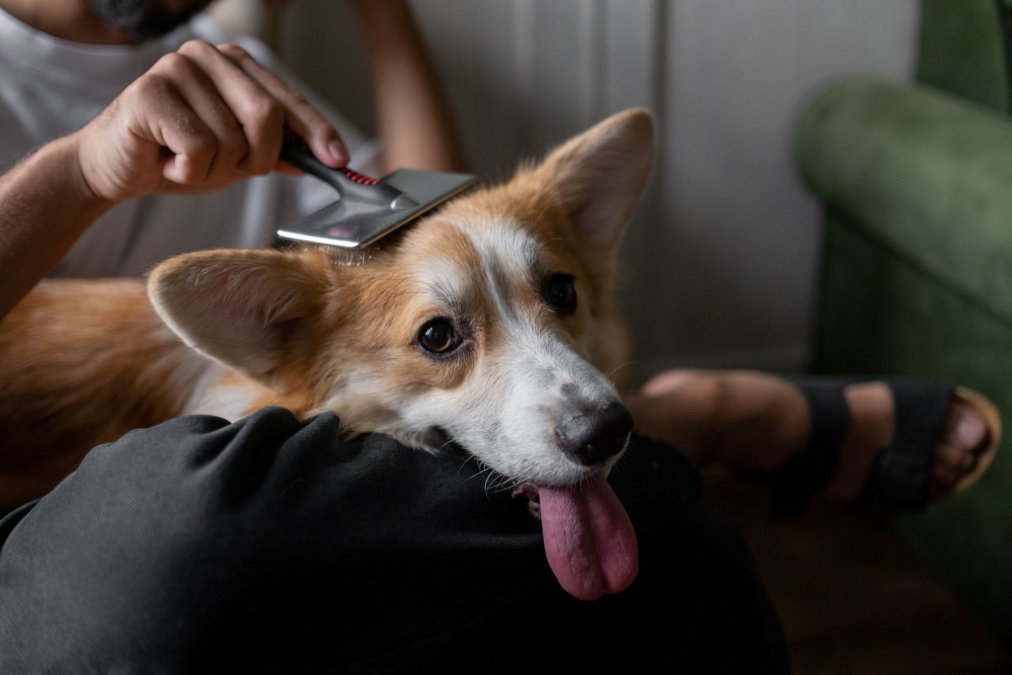
A Corgi sitting in it’s owner’s lap, enjoying being brushed.
Bathing Frequency and Technique
How often you bathe your dog matters. Too frequent and you strip away natural oils. Too infrequent and dirt and debris build up.
When you bathe your dog:
- Use lukewarm water, not hot
- Wet the coat thoroughly before applying shampoo
- Use a gentle, natural shampoo, harsh products damage the coat
- Rinse completely until the water runs clear
- Pat dry gently rather than rubbing vigorously
Brushing and Detangling
Brushing removes dead hair, prevents matting and spreads natural oils through the coat. How often you brush depends on your dog's coat type.
- Long or curly coats: daily or every other day
- Short coats: 2-3 times per week
- Double coats: 3-4 times per week
Step 4: How to Use Hemp Seed Oil for Dogs
Hemp seed oil is a natural supplement that may help support healthy skin and coat. FortunatePaws Hemp Seed Oil is 100% pure, cold-pressed hemp seed oil made for dogs and cats. It's naturally rich in omega-3 and omega-6 fatty acids, which work from the inside to support skin health and coat shine.
How to give it to your dog:
Step 5: Add Targeted Nutritional Support
Beyond hemp seed oil, other natural supplements support coat health. Bee pollen is a natural superfood rich in vitamins, minerals and amino acids. It may help support healthy skin and coat, plus it's a meal topper that's easy to add to your dog's food.
Bee Pollen for Dogs & Cats | Skin, Coat →
Step 6: Monitor Progress and Adjust Your Approach
Check your dog's coat every 2-3 weeks. Compare what you see now to the photos or notes you took at the start. You're looking for gradual improvements: more shine, less shedding, softer feel, fewer flakes.
Keep track of what you're doing. Write down:
- What food and supplements you're using
- How often you're bathing and brushing
- Any changes you notice in your dog's coat or skin
- The diet isn't right for your dog
- You need to groom more frequently
- Your dog needs a different supplement
- There's an underlying skin issue that needs veterinary attention
Common Mistakes to Avoid When Improving Coat Health
Using the wrong shampoo. Harsh, cheap shampoos damage the coat and irritate skin. Invest in a quality product made for dogs.
How long does it take to see coat improvement?
Most dogs show noticeable improvement in coat condition within 4-8 weeks of consistent care. Some see results sooner, others take longer depending on how poor the coat was to start. The key is staying consistent, the routine has to become part of your regular care, not something you do occasionally.
Can diet alone fix a poor coat?
Diet is essential, but it's not the only piece. A good diet combined with regular grooming and targeted supplements works much better than diet alone. All three together give your dog the best chance of a truly healthy coat.
What if my dog has sensitive skin?
If your dog has sensitive skin, use a gentle shampoo formulated for sensitive coats. FortunatePaws Sensitive Pet Shampoo & Conditioner is designed for this. Introduce new supplements slowly and watch for any reaction. If your dog develops redness, itching or other issues, stop the new product and chat with your vet.
Improving your dog's coat health is one of the most rewarding changes you can make. A shiny, soft coat makes your dog look and feel better, and it's a sign that their overall health is good. Start with the basics, good food, regular grooming and targeted support, and you'll see real results.
Explore the FortunatePaws range of pure hemp seed oil for dogs and cats, along with our natural supplements and grooming products designed to support coat health from the inside out.
Frequently Asked Questions
What is the best way to improve a dog's coat health naturally?
Improve dog coat health through a combination of balanced nutrition, regular grooming, and natural supplements. Start with a diet rich in omega fatty acids from fish or whole-food sources like sardines. Establish a grooming routine that includes regular brushing and appropriate bathing with gentle, natural shampoos. Consider adding natural supplements like hemp seed oil or bee pollen to support skin and coat health from within. Most dogs show visible improvement within 6–8 weeks when all these steps work together.
How does diet affect a dog's coat and skin?
Diet directly influences coat quality because skin and fur need proper nutrients to grow strong and healthy. Omega-3 and omega-6 fatty acids are particularly important for reducing inflammation, supporting skin barrier function, and promoting a glossy coat. Protein provides amino acids needed for hair growth. Vitamins A, E and B vitamins support skin health. Dogs fed a balanced diet with whole foods and natural supplements typically develop shinier coats and experience fewer skin issues than those on incomplete diets.
Can supplements help with a dog's dry or dull coat?
Yes, natural supplements can help support coat health when combined with good grooming and nutrition. Hemp seed oil, bee pollen and whole fish treats like sardines provide essential fatty acids, vitamins and minerals that nourish skin from within. These supplements work best as part of a complete approach rather than as a quick fix alone. Results may depend on your dog's individual health, age and existing diet, so allow 4–8 weeks to notice visible improvement in coat shine and texture.
How often should I groom my dog to maintain coat health?
Grooming frequency depends on your dog's coat type. Dogs with short coats benefit from brushing 1–2 times per week, whilst long or double-coated breeds need daily or every-other-day brushing to prevent matting and maintain healthy skin. Most dogs should be bathed every 4–12 weeks with a gentle, natural shampoo suited to their skin type. Regular grooming removes dead hair, stimulates natural oils and allows you to spot skin issues early.