
Table of Contents
- Why Your Dog's Breath Smells and What You Can Do Without a Toothbrush
- Natural Remedies for Dog Bad Breath That Fit Everyday Routines
- Dog Dental Chews for Bad Breath: What to Look For
- Seaweed Powder for Dog Teeth: A Simple Daily Addition
- Water Additives and Sprays: Do They Really Freshen Dog Breath?
- When to See a Vet About Dog Breath
- Building a Simple Daily Dental Routine Without Brushing
- Conclusion: Small Daily Habits Make a Big Difference
- Frequently Asked Questions
Last Updated: 13 October 2026
Why Your Dog's Breath Smells and What You Can Do Without a Toothbrush
If you want to freshen dog breath without brushing, you have more options than you might think. At FortunatePaws, we talk to pet parents every week who feel guilty about skipping the toothbrush. Life gets busy, and some dogs simply will not tolerate a brush near their mouth. The good news is that daily habits, chews and simple food toppers can all play a part in keeping dog breath fresher.
Bad breath is one of the most common reasons pet owners book a vet visit. It usually starts with plaque and tartar building up on the teeth and gums over time.
Below, we will show you exactly how to freshen your dog's breath without brushing, using methods that fit real routines.
Common Causes of Bad Breath in Dogs
Most bad breath in dogs comes from the mouth itself. Food particles and bacteria collect along the gumline, forming plaque that hardens into tartar. That build-up is the main culprit behind that stale, sour smell.
Other causes include:
- Gum disease, which is common in older dogs
- Food stuck between teeth
- Eating something unpleasant, like rubbish or animal waste
- Dental infections or broken teeth
- Some health conditions, such as kidney or liver issues
If your dog's breath changes suddenly and stays that way, it is worth a vet check. We will cover that later.
Natural Remedies for Dog Bad Breath That Fit Everyday Routines
Natural remedies for dog bad breath work best as small daily habits, not one-off fixes. The aim is to reduce plaque and bacteria a little bit every day.
Here are simple options that fit busy households:
- Dental chews: chewing helps scrape plaque off the teeth
- Seaweed powder: a daily food topper that supports oral hygiene
- Water additives: easy to use, though results vary
- Dental sprays: quick to apply, but many dogs dislike the taste
- Raw, crunchy vegetables: carrots and cucumber can help
- Fresh water: always available, changed daily
Chewing is the key. Dogs naturally clean their teeth by gnawing, so giving them something safe to chew on does real work.

A common mistake is relying on one method alone. Combining a chew with a daily topper tends to work better than either on its own.
Dog Dental Chews for Bad Breath: What to Look For
Dog dental chews for bad breath work by creating friction against the teeth as your dog chews. The texture matters more than the flavour.
Look for chews that:
- Take a few minutes to work through, not seconds
- Have a firm, slightly abrasive texture
- Are sized correctly for your dog's mouth
- Use simple ingredients with no artificial additives
- Come from a trusted, traceable source
Avoid chews that are too hard. Very hard chews can crack teeth, especially in older dogs or small breeds.
Our Shark Cartilage Treats are a single-ingredient chew made from Australian shark cartilage. Their crunchy texture helps support cleaner teeth by assisting with the removal of plaque and tartar as your dog chews. They are also naturally rich in glucosamine, chondroitin, collagen and calcium, which supports joint health and everyday mobility.

That combination makes them a practical pick for senior dogs who need both dental and joint support.
Seaweed Powder for Dog Teeth: A Simple Daily Addition
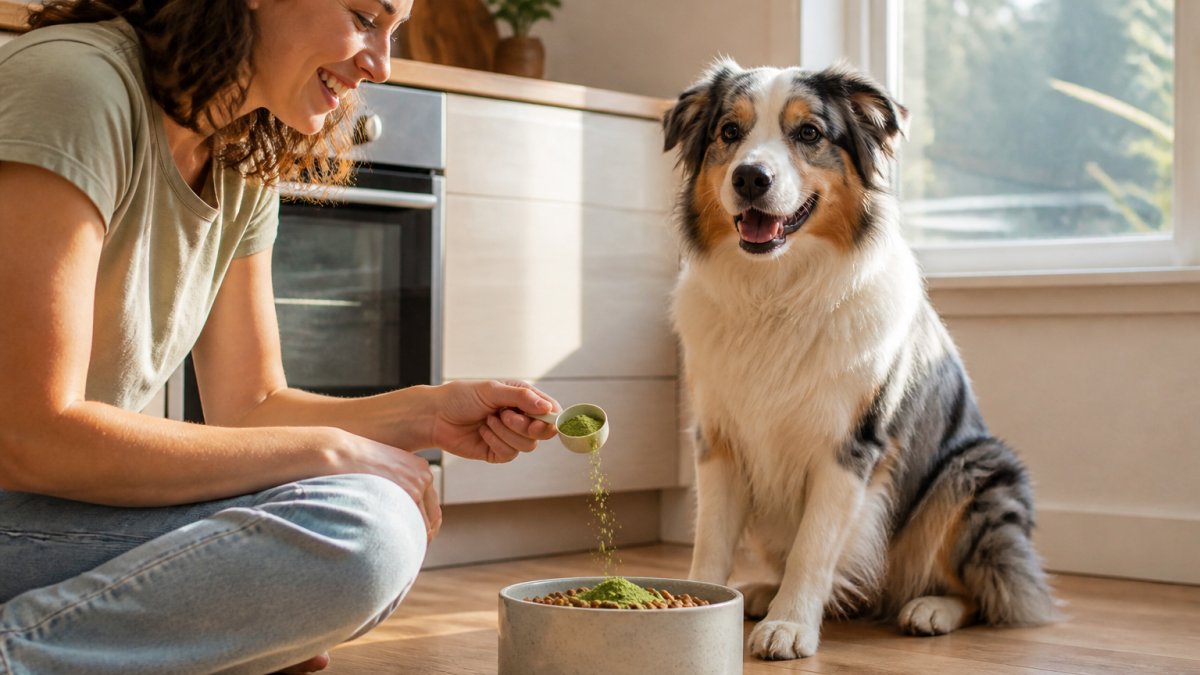
Seaweed powder for dog teeth is one of the easiest habits to build, because there is nothing to apply and nothing for your dog to resist. You simply sprinkle it over food.
KelpClean Seaweed Powder is made from 100% Ascophyllum nodosum, a type of seaweed rich in minerals and natural compounds. It helps support healthy teeth and gums and helps maintain fresher breath as part of a daily routine.
Why pet parents like it:
- Easy to sprinkle over food
- Suitable for dogs and cats
- No fillers, additives or preservatives
- Sustainably wild-harvested seaweed
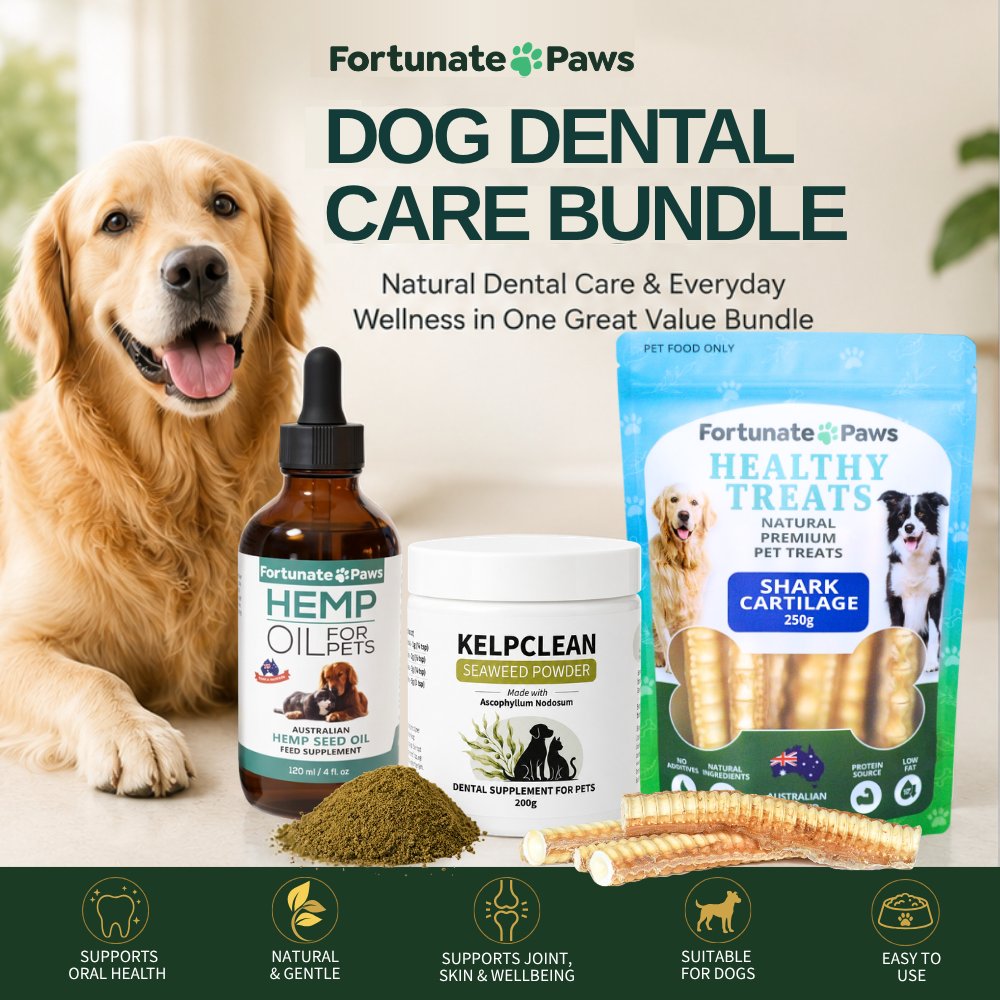
It comes in a 60g size for a first try and a 200g size for regular use. If you want a complete routine in one go, the Dental Health Bundle pairs KelpClean with our Hemp Seed Oil and Australian Shark Cartilage.
KelpClean Seaweed Powder | Dental Supplement for Dogs & Cats | 200g →
Water Additives and Sprays: Do They Really Freshen Dog Breath?
Water additives and sprays can help, but they are not a magic fix. They work by reducing bacteria in the mouth, which can lower odour. The catch is that many dogs refuse to drink water that tastes different, and sprays often end up as a wrestling match.
Water additives suit some households well. They are quick and require no handling of your dog's mouth. But if your dog is fussy about water, or shares a bowl with other pets, they can be impractical.
Sprays tend to be more direct. You apply them onto the teeth and gums, which means closer contact with the plaque. The trade-off is cooperation. Most dogs need slow, patient training before they will accept a spray.
Our honest take: these tools are useful as extras, not foundations. If your dog already tolerates them, keep going. If not, put your effort into chews and a daily topper instead. You will get more consistent results with less stress.
When to See a Vet About Dog Breath
See a vet about dog breath when the smell is sudden, severe or ongoing, or when you notice other signs alongside it. Persistent bad breath often points to gum disease or another health issue that needs proper diagnosis.
Book a visit if you spot:
- Loose or discoloured teeth
- Red, swollen or bleeding gums
- Drooling or dropping food while eating
- Pawing at the mouth
- Weight loss or reduced appetite
- Bad breath that returns quickly after cleaning
Regular vet checks are the best way to catch dental problems early. Home care supports oral health, but it does not replace a professional examination.
Building a Simple Daily Dental Routine Without Brushing
A routine only works if it is realistic. Ours is built around three small steps that take under a minute a day.
Step |
What to Do |
How Often |
|---|---|---|
Morning |
Sprinkle KelpClean over breakfast |
Daily |
Afternoon |
Offer a dental chew |
3-4 times a week |
Evening |
Fresh water, quick mouth check |
Daily |
That is it. No toothbrush, no wrestling, no drama.
A few things that make it stick:
- Keep the powder next to your dog's food so you do not forget
- Store chews somewhere visible, not hidden in a cupboard
- Check the mouth weekly for redness or loose teeth
- Note any changes in breath so you can tell your vet
Most pet parents find the routine becomes automatic within a couple of weeks. The trick is starting small and staying consistent rather than doing everything at once.
Conclusion: Small Daily Habits Make a Big Difference
You do not need a toothbrush to make a real difference to your dog's breath. A daily seaweed topper, a few good chews each week and a quick mouth check can all help support oral hygiene over time. If your dog's breath changes or you notice other symptoms, see your vet.
Explore the FortunatePaws dental range, including KelpClean Seaweed Powder and our Dental Health Bundle, to build a simple routine that fits your day. Our team is always happy to help you choose what suits your dog.
Freshening your dog's breath without brushing comes down to consistency, not perfection. FortunatePaws offers natural, Australian-made options like KelpClean Seaweed Powder and Shark Cartilage Treats to support everyday oral hygiene. Explore the FortunatePaws range and find a simple routine that works for you and your dog.
Frequently Asked Questions
How can I freshen my dog's breath without brushing?
You can freshen your dog's breath without brushing by using dental chews, water additives, dental sprays, or natural supplements like seaweed powder. These methods help reduce plaque and tartar build-up, which are common causes of bad breath. For example, KelpClean Seaweed Powder sprinkled over food supports healthy teeth and gums as part of a daily routine. Always combine these with regular vet check-ups for best results.
Do dental chews help freshen a dog's breath?
Yes, dental chews can help freshen a dog's breath by mechanically removing plaque and tartar as your dog chews. Look for chews with a firm texture that promotes chewing, such as shark cartilage treats. These natural chews also support joint health and provide a satisfying outlet for your dog's natural chewing instincts. They are a convenient addition to a brushing-free dental routine.
Can seaweed powder help with dog breath?
Seaweed powder, specifically Ascophyllum nodosum, may help support fresher breath by reducing plaque build-up and supporting healthy gums. KelpClean Seaweed Powder is made from 100% pure Ascophyllum nodosum and is easy to sprinkle over food. It contains no fillers or additives, making it a simple natural option for everyday oral hygiene. Results can vary, so use it consistently as part of a balanced diet.
When should I take my dog to the vet for bad breath?
You should take your dog to the vet if bad breath persists despite home care, is accompanied by drooling, pawing at the mouth, difficulty eating, or if you notice loose teeth or bleeding gums. These signs could indicate dental disease or other health issues. A vet can assess your dog's oral health and recommend appropriate treatment. Early intervention helps prevent more serious problems.