
Table of Contents
- Does Coconut Oil Help Dog Coat Health?
- Is Coconut Oil Safe for Dogs?
- Coconut Oil for Dogs' Dry Skin
- Understanding the Causes of Itchy Skin in Dogs
- How to Use Coconut Oil for Your Dog's Coat
- Natural Dog Skin and Coat Support Beyond Coconut Oil
- Potential Side Effects and When to Be Cautious
- Frequently Asked Questions
Last Updated: October 10, 2026
Does Coconut Oil Help Dog Coat Health?
Your dog's coat tells you a lot about their overall wellbeing. A shiny, healthy coat usually means your dog is thriving. A dull, flaky, or itchy coat often signals that something needs attention.
Many pet owners turn to coconut oil as a natural way to support their dog's skin and coat health. But does coconut oil actually work? The answer is more nuanced than a simple yes or no.
Coconut oil contains fatty acids and compounds that may help support skin health and coat condition in dogs. However, it's not a one-size-fits-all solution. Some dogs benefit from it. Others might not see much difference. And for a few, it can cause digestive upset.
At FortunatePaws, we believe in natural approaches to pet wellness. This guide breaks down what coconut oil can and can't do for your dog's coat, how to use it safely, and when to consider other options.
Is Coconut Oil Safe for Dogs?
Yes, coconut oil is generally safe for dogs when used in moderation. It's a natural product with no toxic ingredients.
However, "safe" doesn't mean risk-free. Here's what you need to know:
Digestive considerations Coconut oil is high in fat. Some dogs handle dietary fat well. Others experience loose stools, diarrhoea, or upset stomach when you introduce fatty foods too quickly. If your dog has a sensitive stomach or pancreatitis history, check with your vet before adding coconut oil to their diet.
Choking hazard for some Coconut oil can solidify at room temperature. If you give your dog a large chunk, there's a small risk of choking. Always soften it or mix it into food.
Allergic reactions (rare) Some dogs have sensitivities to coconut. Watch for itching, redness, or swelling after first use. Stop immediately if these appear.
Weight gain Coconut oil is calorie-dense. A tablespoon contains around 120 calories. If you add it to your dog's meals without reducing other food portions, your dog might gain weight over time.
The safest approach is to start small. Begin with a tiny amount mixed into food. Observe your dog for a few days. Gradually increase the amount if they tolerate it well.
Coconut Oil for Dogs' Dry Skin
Dry skin is one of the most common reasons pet owners try coconut oil. When your dog's skin is flaky, itchy, or uncomfortable, a natural moisturiser sounds appealing.
Coconut oil does contain fatty acids that may help moisturise skin. Applied topically, it can soften dry patches and reduce flaking.
How it works on dry skin The oil creates a protective barrier over the skin. This barrier helps lock in moisture. For dogs with mild dryness, this can provide relief. The fatty acids may also help reduce inflammation associated with dry skin.
Realistic expectations Coconut oil isn't a cure for chronic dry skin. If your dog's dryness is caused by allergies, parasites, or an underlying health condition, coconut oil alone won't fix it. It might ease symptoms temporarily, but the root cause needs addressing.
Application tips Rub a small amount directly onto dry patches. Work it into the fur with your fingers. You can also mix it into their food for internal support. Most dogs tolerate topical application well, though some find it messy.
When to see improvement If coconut oil is going to help, you'll usually notice softer, less flaky skin within 2-3 weeks of regular use. If there's no change after a month, your dog's dryness likely has a different cause.
For more targeted support, many pet owners combine coconut oil with other natural ingredients. FortunatePaws offers Bee Pollen for Dogs & Cats, which is naturally rich in vitamins, minerals, and essential fatty acids to support skin health as part of a balanced diet.

Understanding the Causes of Itchy Skin in Dogs
Before treating itchy skin with any product, it helps to understand what's causing it.
Itchiness in dogs stems from several sources:
Allergies Environmental allergies (pollen, dust, mould) and food allergies are common culprits. Allergic itching is usually seasonal or persistent. Coconut oil might ease discomfort but won't address the allergy itself.
Parasites Fleas, mites, and lice cause intense itching. Coconut oil has mild antimicrobial properties, but it's not an effective parasite treatment. Your dog needs proper flea and tick prevention from your vet.
Dry skin and weather Cold, dry weather can strip moisture from your dog's skin. This is where coconut oil genuinely helps. The moisturising effect addresses the root cause.
Yeast or bacterial infections Itchy, inflamed skin sometimes signals a fungal or bacterial infection. These require veterinary treatment. Coconut oil alone won't clear an infection.
Poor nutrition A diet lacking essential fatty acids can result in dull, itchy skin. This is where dietary supplements shine. Adding omega-rich foods or supplements to your dog's meals addresses the underlying nutritional gap.
Stress and anxiety Some dogs scratch excessively when stressed. Addressing the anxiety is key. Topical treatments won't solve stress-related itching.
The important point: identify the cause before treating the symptom. If your dog is scratching constantly, a vet check is the first step. Coconut oil works best for mild, seasonal dryness, not for chronic or severe itching.
How to Use Coconut Oil for Your Dog's Coat
If you've decided coconut oil is right for your dog, here's how to use it safely and effectively.
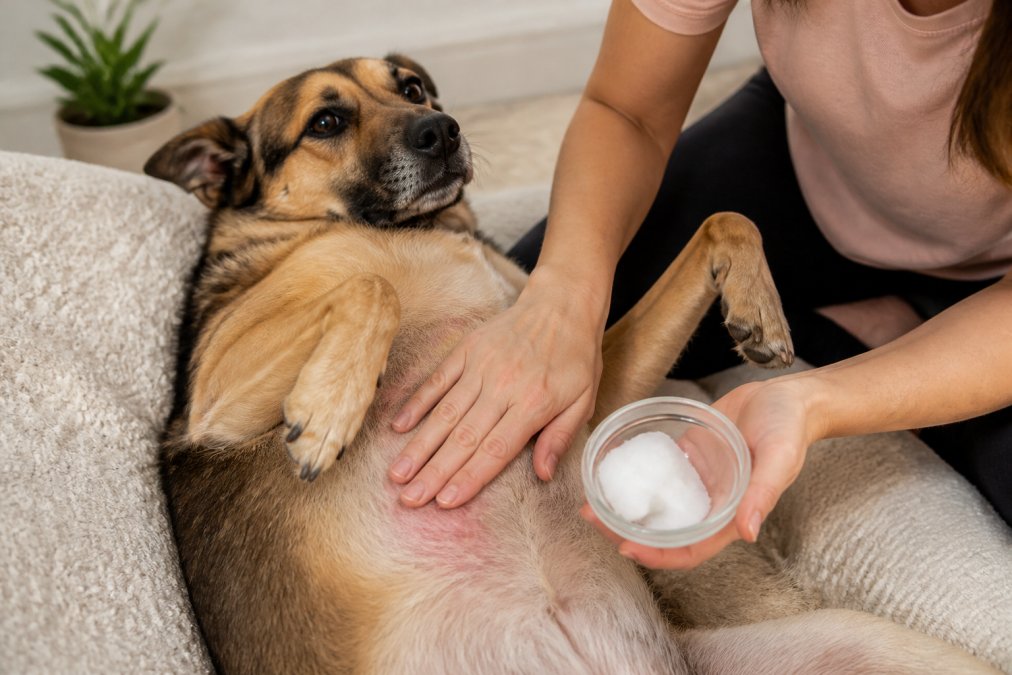
A dog owner massaging coconut oil into a dog’s skin
Topical application (external) Warm the coconut oil slightly so it's soft but not hot. Test the temperature on your inner wrist first. Apply a small amount directly to dry patches or problem areas.
Do this 2-3 times per week for best results. You don't need to bathe it out immediately, though some owners prefer to rinse their dog after a few hours to avoid an oily coat.
Dietary use (internal) Mix a small amount into your dog's regular food. Start with 1/4 teaspoon for small dogs and 1/2 teaspoon for larger dogs. Increase gradually over a week to allow their digestive system to adjust.
Most dogs tolerate up to 1 tablespoon daily, depending on size. But more isn't better. Stick to the lower end if your dog has a sensitive stomach.
Paw balm Coconut oil works well as a natural paw balm. Rub it onto dry, cracked paws. It softens the skin and provides protection. Reapply as needed, especially during dry seasons.
Bathing routine Some owners add a teaspoon of coconut oil to warm bathwater. This can help moisturise the skin during a bath. Use lukewarm water, not hot, as hot water dries skin further.
Frequency and consistency Results take time. Give it at least 3-4 weeks before deciding whether it's working. Consistency matters more than occasional use.
Storage Coconut oil stays solid in cool temperatures and liquid when warm. Store it in a cool, dark place. It doesn't require refrigeration but lasts longer if kept cool.
Natural Dog Skin and Coat Support Beyond Coconut Oil
Coconut oil is one tool, but it's not the only natural option for supporting your dog's skin and coat.
Essential fatty acids from other sources Omega-3 and omega-6 fatty acids are crucial for healthy skin and coat. Fish oil is a well-known source. FortunatePaws Hemp Seed Oil for Pets is naturally rich in omega-3, 6, and 9 fatty acids and supports healthy skin and a shiny coat as part of a balanced diet. It's a pure, Australian-made option with no added fillers.
Seaweed and kelp Seaweed contains minerals and nutrients that support skin health. FortunatePaws KelpClean Seaweed Powder is made from 100% Ascophyllum nodosum and supports healthy teeth, gums, and fresher breath.
Bee pollen Bee pollen is naturally rich in vitamins, minerals, amino acids, and essential fatty acids. It's a whole-food supplement that supports skin and coat health. Simply sprinkle it over your dog's meals. It's suitable for both dogs and cats.
Proper grooming Regular brushing removes dead hair and distributes natural oils through the coat. A good brush routine improves coat health more than any product alone.
Quality nutrition The foundation of a healthy coat is a balanced diet. Ensure your dog's food contains adequate protein and fat. Poor nutrition shows up in the coat first.
Hydration Dehydrated dogs often have dry skin. Make sure fresh water is always available. Some dogs drink more if you add a little water to their dry food.
Environmental factors Humidity, temperature, and seasonal changes affect skin health. In dry seasons, your dog's skin naturally becomes drier. This is when coconut oil or other moisturising products help most.
Potential Side Effects and When to Be Cautious
Coconut oil is natural, but natural doesn't mean side-effect-free for every dog.
Digestive upset The most common issue is loose stools or diarrhoea. This usually happens when you introduce coconut oil too quickly or use too much. Start small and increase gradually.
Pancreatitis risk Dogs with a history of pancreatitis should avoid coconut oil. The high fat content can trigger flare-ups. Always check with your vet first if your dog has had pancreatitis.
Allergic reactions Some dogs react to coconut itself. Signs include itching, redness, swelling, or vomiting. If this happens, stop use immediately and contact your vet.
Weight gain Coconut oil adds calories. If your dog is overweight or prone to weight gain, the extra calories matter. Reduce other food portions if you add coconut oil to their diet.
Skin irritation (topical) Rarely, applying coconut oil to the skin causes irritation rather than relief. This might happen if your dog has sensitive skin or an infection.
Interaction with medications If your dog takes medications, especially for digestive or pancreatic conditions, check with your vet. Coconut oil might interfere with absorption or effectiveness.
When to stop and seek help Stop using coconut oil if you notice:
- Persistent vomiting or severe diarrhoea
- Excessive itching or redness after application
- Signs of allergic reaction (swelling, difficulty breathing)
- Lethargy or loss of appetite
Contact your vet if symptoms don't improve within a week of stopping use.
Does coconut oil help dog coat health? For many dogs, yes, but it's not a universal fix.
The real secret to a healthy coat is consistency: good nutrition, regular grooming, hydration, and addressing any underlying health issues. Coconut oil can support these efforts, but it's one piece of the puzzle.
If you're looking for additional natural support, explore the FortunatePaws range of pure hemp seed oil for dogs and cats.

Frequently Asked Questions
Does coconut oil really help a dog's coat?
Coconut oil may help support your dog's coat health when used appropriately. It contains fatty acids that can contribute to skin moisture and coat shine. However, results vary between individual dogs, and it works best as part of a balanced diet and overall grooming routine. Some dogs benefit noticeably, whilst others show minimal change. If your dog's coat issues persist, consult your vet to rule out underlying health concerns.
Is coconut oil safe for dogs to eat?
Yes, coconut oil is generally safe for dogs in moderation. Start with small amounts to check your dog tolerates it well. Most dogs can handle a teaspoon or so mixed into food, though individual tolerance varies. Avoid giving too much, as excess can cause digestive upset or contribute to weight gain. Always introduce new foods gradually and monitor your dog's response.
Can coconut oil help with a dog's dry or itchy skin?
Coconut oil may help soothe mildly dry skin due to its moisturising properties. However, persistent itching and flaking often signal underlying issues like allergies, parasites, or skin infections that require veterinary attention. Coconut oil alone won't address these root causes. If your dog's itching is severe or doesn't improve, consult your vet before relying on home remedies.
How much coconut oil should I give my dog?
Start small—roughly a quarter to half teaspoon for small dogs, up to one teaspoon for larger dogs, mixed into food. This helps you gauge whether your dog tolerates it well. Introduce it gradually over a few days. Excessive amounts can cause digestive upset or contribute to unnecessary calories. Always check with your vet about appropriate amounts for your individual dog's size and health status.