
Table of Contents
- Why Dogs Get Nervous During Thunderstorms
- How to Comfort a Dog During a Storm
- Creating a Safe Space for Dogs During Thunderstorms
- Thunderstorm Desensitisation for Dogs
- Natural Support During Storm Season
- When to See a Vet About Dog Storm Fear
- Frequently Asked Questions
Last Updated: October 7, 2026
Why Dogs Get Nervous During Thunderstorms
Dogs experience thunderstorms very differently than we do, which is why learning how to calm a nervous dog during thunderstorms is so important for their wellbeing. Their hearing is far more sensitive than ours, so the sound of thunder feels overwhelming. The pressure changes in the air, the sudden flashes of light, and the unfamiliar sensations all combine to create genuine fear.
Some dogs are naturally more anxious than others. This isn't a character flaw. Genetics, early experiences, and temperament all play a role. A dog who had a scary experience during a storm as a puppy might carry that fear into adulthood. Even dogs without a specific trigger can develop storm anxiety simply because the experience feels unpredictable and out of their control.
Your dog's nervous behaviour during storms isn't something to dismiss. When a dog is frightened, their body releases stress hormones (Behavioral, Physiological, and Pathological Approaches of Cortisol in Dogs). Over time, repeated exposure to storms without support can intensify anxiety. This is why helping your dog feel safer during storms matters for their long-term wellbeing.
How to Comfort a Dog During a Storm
Stay calm yourself
Your dog picks up on your energy. If you're anxious about the storm, your dog will sense that and become more nervous. When a storm arrives, take a breath and move through your home with a calm, steady presence.
This doesn't mean ignoring your dog or pretending nothing is happening. It means being grounded. Sit with your dog if they seek you out. Speak in a quiet, reassuring tone. Your calm behaviour tells your dog that you've got this under control.
Many pet owners worry that comforting a nervous dog during a storm will reinforce the anxiety. The science doesn't support this. Providing comfort during a frightening event doesn't create the fear. The fear already exists. What you're doing is helping your dog feel less alone in that moment.
Use your voice and touch reassuringly
Gentle touch can be incredibly soothing. If your dog is comfortable with it, stroking them slowly can lower their heart rate and reduce stress. Some dogs prefer to sit close to you without being touched. Follow your dog's lead.
Your voice matters too. A quiet, steady tone is more reassuring than a high-pitched or urgent one. You don't need to say anything special. Simply talking to your dog in a calm voice helps. Phrases like "You're okay" or "I'm here" remind them they're not alone.
If your dog wants to hide, that's okay. Don't force them out of their safe spot. Some dogs feel safer in a crate, under a bed, or in a cupboard. Let them retreat if that's what they need. You can sit nearby and offer quiet presence.
Distract with play or treats
Distraction works well for some dogs, especially those with mild anxiety. A puzzle toy, a long-lasting chew, or a favourite toy can help redirect their focus away from the storm.
Treats are another option. If your dog can eat during a storm, offering high-value treats gives them something positive to focus on. It's not about bribing them into calmness. It's about creating a different association with storm time.
Some dogs won't eat or play during a storm because they're too frightened. That's normal. Don't push it. Distraction works best for dogs with mild to moderate anxiety, not severe fear.
Creating a Safe Space for Dogs During Thunderstorms
Choose a quiet interior room
Interior rooms are naturally quieter than rooms with windows. A bathroom, laundry, or hallway often works well. These spaces have fewer windows, so there's less lightning to see and less noise to hear.
The room should be away from the main living areas if possible. Your dog needs a retreat that feels separate from the chaos of the storm. Make sure your dog can access water and has a comfortable place to lie down.
If your dog has a crate they're comfortable in, placing it in this quiet room gives them an even safer den-like space. Some dogs find the enclosed feeling of a crate very soothing during stressful times.
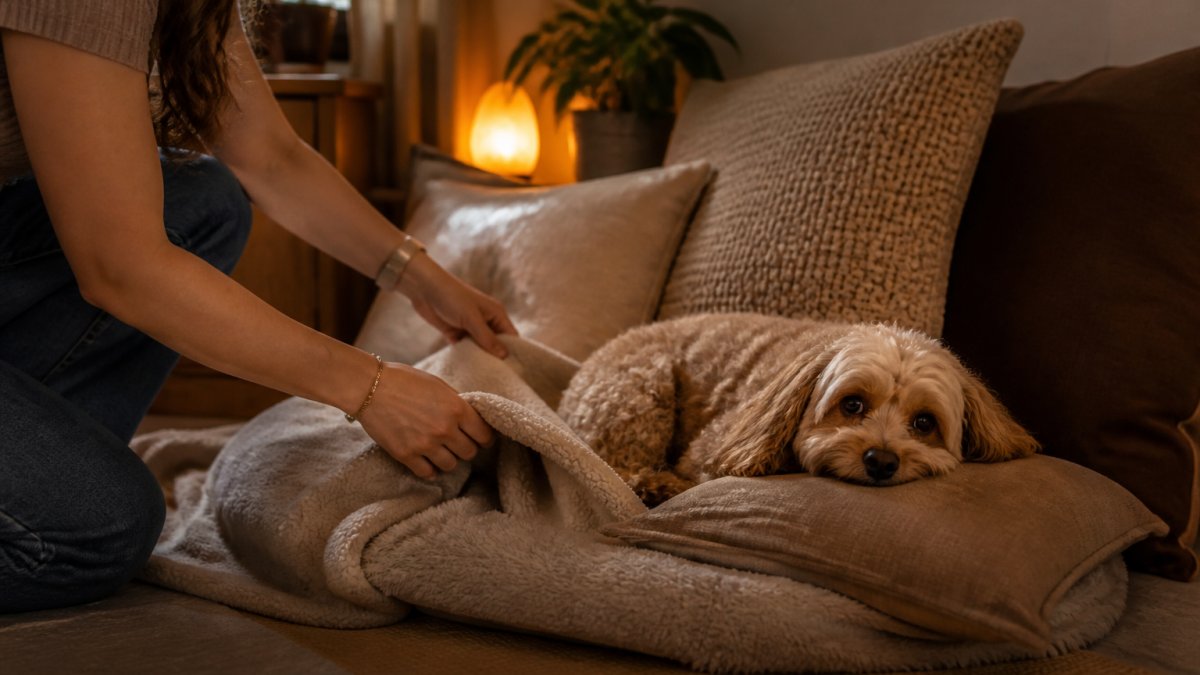
Add comfort items and familiar scents
Bring your dog's favourite bedding or blanket into the safe space. Familiar scents are calming. If you have a piece of your clothing, that works too. Your scent is reassuring to your dog.
Some pet parents find that playing calming music or white noise helps mask the sound of thunder. There are playlists specifically designed for anxious dogs. Soft, instrumental music or nature sounds can reduce the startle response to sudden thunder.
Keep the room temperature comfortable. A nervous dog might pant or shake, so ensure they're not too warm. Make sure fresh water is always available.
Reduce noise with music or white noise
Sound masking is surprisingly effective. White noise, rainfall sounds, or specially designed pet relaxation music can help cover the sound of thunder. This reduces the startle factor when thunder strikes.
You can find pet-specific calming music on streaming services. Play it at a moderate volume. The goal is to create a gentle soundscape that feels safer than the storm sounds.
MellowPet Omega Drops 30ml | Stress Relief for Dogs & Cats →
If music isn't your preference, a fan or humidifier can provide consistent background noise that masks sudden sounds.
Thunderstorm Desensitisation for Dogs
Start with recorded storm sounds
Desensitisation works by gradually exposing your dog to storm sounds in a controlled way. This is a longer-term approach, not something that helps during an actual storm.
Start by playing very quiet recordings of thunderstorms. Keep the volume so low your dog barely notices. Pair this with something positive like treats or play. The goal is to create a new association: storm sounds mean good things happen.
Over weeks or months, very gradually increase the volume. Move slowly. If your dog shows signs of fear, you've increased too quickly. Go back to a quieter level and progress more slowly.
Gradually increase volume and frequency
This process takes patience. Some dogs respond well to desensitisation. Others make progress but never fully lose their fear. That's okay. Even a reduction in anxiety is a win.
Work with your dog at their pace. Never rush. If your dog seems stressed, stop and try again another day. Consistency matters more than speed.
Keep sessions short. Five to ten minutes is plenty. You're building a new association gradually, not flooding your dog with the sound.
Natural Support During Storm Season
Many pet parents look for additional support during storm season to help calm nervous dog thunderstorms. At FortunatePaws, we understand that some dogs need extra help feeling calm during stressful situations like thunderstorms.
MellowPet Omega Drops are formulated to support calmness and relaxation in dogs and cats. Made with hemp seed oil combined with a unique blend of calming terpenes, they may help support your dog's emotional wellbeing during challenging times. You can give them as part of your dog's daily routine or before you know a storm is coming.

These drops are easy to add to your dog's food or give directly. Many pet parents find they're a helpful addition to their storm-management routine, alongside creating a safe space and staying calm themselves.
When to See a Vet About Dog Storm Fear
If your dog's storm anxiety is severe, a vet visit is worthwhile. Severe anxiety might look like destructive behaviour, inability to eat or drink, excessive panting, or signs of panic that don't settle.
Your vet can rule out any underlying health issues and discuss options with you. Some dogs benefit from additional support beyond environmental management and natural supplements. Your vet can advise on what's right for your individual dog.
Storm phobia is real and treatable. There's no shame in seeking professional help. Your vet might recommend a veterinary behaviourist for more intensive support.
If your dog's anxiety is new or has suddenly worsened, a vet check is especially important. Changes in anxiety levels can sometimes indicate an underlying health issue.
Storm anxiety in dogs is manageable. By staying calm yourself, creating a safe space, and providing reassurance, you're already doing the most important things. For dogs who need extra support, natural options like MellowPet Omega Drops may help support calmness during stressful situations. Explore the FortunatePaws range of calming drops for dogs and cats to see if they might be a helpful addition to your storm-management strategy.
Frequently Asked Questions
How can I calm my nervous dog during a thunderstorm?
Stay calm yourself, as dogs pick up on your anxiety. Create a quiet safe space away from windows, use gentle reassurance through your voice and touch, and offer distractions like treats or toys. You can also try playing calming music or white noise to mask the storm sounds. Some pet owners find natural support options helpful alongside these comfort strategies.
Should I comfort my dog when they're scared of thunder?
Yes, offering reassurance is important. Contrary to old advice, comforting your dog doesn't reinforce fear—it provides security. Gentle stroking, a calm voice, and your presence help your dog feel safer. However, avoid over-reacting to their distress, as excessive fussing can amplify anxiety. The goal is calm, steady support rather than excited sympathy.
Can I train my dog to be less afraid of thunderstorms?
Desensitisation can help over time. Play recorded storm sounds at low volume during calm moments, pair them with treats or play, and gradually increase the volume over weeks or months. This teaches your dog that storm sounds aren't a threat. It requires patience and consistency, but many dogs show improvement with this approach.
When should I speak to a vet about my dog's storm fear?
Contact your vet if your dog's fear is severe—such as destructive behaviour, escape attempts, refusal to eat, or excessive panting and drooling. If your dog injures themselves trying to hide or escape, seek veterinary advice. Your vet can rule out pain or health issues and discuss options tailored to your dog's needs.